Money & Payments
Alipay & WeChat Pay With a Foreign Card: Full Setup Guide (2026)
Step-by-step setup of Alipay and WeChat Pay with an international Visa, Mastercard, or Amex - fees, limits, what foreign cards still can't do, and where you genuinely need cash.
China Travel Made Easy concierge desk · Last updated · 2 primary sources checked
Decision first
What should I do?
- Best for
- Visitors using an overseas card who want mobile payment to be reliable without assuming one app or one card will work everywhere.
- Do this
- Verify Alipay and Weixin Pay before departure, link two cards on different networks, and carry small-denomination RMB as the independent fallback.
- Watch for
- A successfully linked card can still fail on private QR codes, deposits, issuer fraud checks, or specific mini programs.
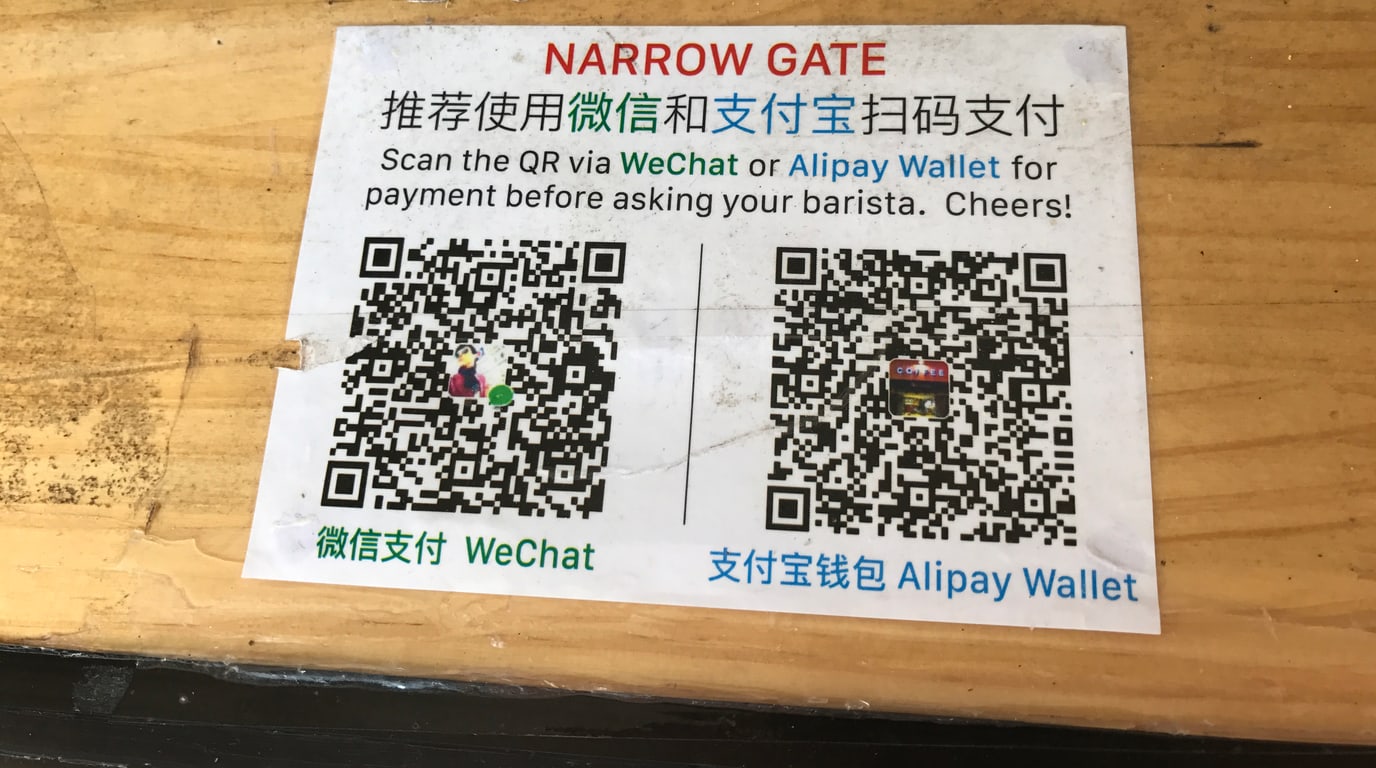
China skipped credit cards and went straight from cash to QR codes. In cities, your physical Visa is nearly useless at street level — even luxury malls route most payments through phones. The good news: since 2024, linking a foreign card to the two payment super-apps is genuinely easy, and as of mid-2026 it’s the single best-functioning piece of China travel infrastructure.
What CrowdListen surfaced
The newest payment questions are not just “can I link my card?” They are failure-mode questions from travelers who already tried to prepare:
- Linked card, failed payment. A wallet can accept a foreign card during setup and still fail at a specific merchant, bank check, or QR flow. Bring at least two cards and set up both Alipay and WeChat Pay before departure.
- Private QR versus merchant QR. Some person-to-person or private QR payments can fail for foreign-card users even when normal merchant QR payments work. If a scan fails, ask whether the merchant can scan your payment code instead.
- No-app anxiety. Travelers ask whether a China trip is still manageable if Alipay fails. The answer is yes, but it gets harder: you need cash, hotel help, airport/international-chain card terminals, and more patience with taxis and small restaurants.
- Official setup is necessary but not sufficient. Alipay’s traveler product supports international bank cards, but verification, card-network blocks, and transaction context still matter. Check the in-app status before flying and keep fallback money separate from your phone.
This guide now treats mobile payment as a reliability problem, not a one-time setup task.
Which one do you actually need?
Set up both, lead with Alipay. Alipay’s international onboarding is more reliable, its translation is better, and it bundles useful mini-apps (Didi ride-hailing, metro QR codes, train tickets) under one English interface. WeChat Pay matters because some small restaurants and scan-to-order menus are WeChat-only — and you’ll want WeChat anyway for its messaging and translate features.
Setting up Alipay (15 minutes, do it at home)
- Download Alipay from the App Store / Google Play. On first launch, choose English (it auto-detects).
- Register with your home phone number. You do not need a Chinese number.
- Verify your identity. Go to Account → Profile → Identity verification, photograph your passport photo page, and take the selfie scan. Approval is usually minutes, occasionally a day. This step unlocks the higher limits — don’t skip it.
- Add your card under Account → Bank Cards. Visa, Mastercard, Amex, JCB, Discover, and Diners are accepted. Your bank may fire a fraud alert — approve it.
- Optional but smart: open the Transport section once so metro QR codes are ready, and note the Didi mini-program on the home screen.
WeChat Pay setup is similar: Me → Services → Wallet → Add a Card, with passport verification. WeChat’s verification rejects photos more often; retry with brighter lighting and no glare.
How paying actually works
There are two QR directions, and you’ll use both daily:
- You scan them (street stalls, small shops, taxis): tap Scan, point at the merchant’s printed QR code, type the amount, confirm. The merchant’s phone chirps a confirmation.
- They scan you (supermarkets, chains, ticket counters): tap Pay/Receive and show the barcode. The cashier zaps it with a scanner gun.
Money comes off your linked card per transaction. Receipts live in the app, useful for VAT refunds at departure.
Fees and limits (as of mid-2026)
| Item | Alipay / WeChat Pay with foreign card |
|---|---|
| Transactions ≤ ¥200 | No platform fee |
| Transactions > ¥200 | ~3% service fee on the full amount |
| Single transaction cap | ~US$5,000 (verified accounts) |
| Annual cap | ~US$50,000 |
| Your bank’s FX fee | Whatever your card charges — bring a 0% foreign-transaction-fee card |
These numbers were raised in 2024 and have been stable since, but the platforms can tweak them — check the in-app fee notice for current figures.
What foreign cards still can’t do
Be honest with your expectations; these limitations catch people out:
- No person-to-person transfers or red packets. If a friend wants to split a bill via transfer, pay the restaurant directly instead.
- Some deposits and refunds behave badly — shared power banks and bike rentals occasionally refuse foreign-card-backed accounts, or refund slowly.
- A few mini-programs demand a Chinese bank card or Chinese ID (certain hospital bookings, some membership programs). Rare for tourists.
- Offline failure mode: no signal, no payment. Keep cash for the day your eSIM hiccups.
If payment fails at the counter
Use this order because it fixes the most common failures fastest:
- Try the other app. If Alipay fails, try WeChat Pay; if WeChat Pay fails, try Alipay.
- Switch the card. A Visa block and a Mastercard block are often different bank decisions.
- Change the QR direction. Instead of scanning the merchant’s printed code, open your payment code and ask the cashier to scan you.
- Lower the amount. If a larger transaction triggers a fee, limit, or bank challenge, split the payment when the merchant allows it.
- Use cash. Keep small notes for exactly this moment.
- Move the transaction. Pay through a hotel desk, airport counter, international chain, Trip.com, or another channel that accepts foreign cards more reliably.
If a payment failed because of passport verification or a bank fraud block, do not debug it while blocking a line. Step aside, switch to cash, then fix the account on Wi-Fi.
Where cash still matters
China’s central bank requires merchants to accept cash, and compliance is decent. You’ll realistically want cash for: temple donation boxes and incense, rural vendors and small-town markets, older taxi drivers who hate waiting for app confirmation, and emergencies. ¥500–1,000 in mixed small notes covers a two-week trip for most people. Withdraw at Bank of China or ICBC ATMs (reliable with foreign cards, ~¥20,000 daily limits, your bank’s fees apply). Airport arrival halls always have one.
Backup plans, ranked
- Second card on a different network linked to both apps (Visa + Mastercard).
- Cash, as above.
- Physical card tap-to-pay works at international hotels, airport shops, and some chains — don’t count on it elsewhere.
- UnionPay travel cards and hotel front desks exchanging currency exist as deeper fallbacks.
Set this all up at home, test what you can, and payments go from the scariest-sounding part of a China trip to the part you stop thinking about by day two.
Frequently asked questions
- Can foreigners use Alipay and WeChat Pay with a foreign credit card?
- Yes. Since 2023, and much more smoothly since 2024, both Alipay and WeChat Pay accept international Visa, Mastercard, American Express, JCB, Discover, and Diners Club cards. You register with your home phone number, verify with your passport, link the card, and pay by QR code like locals do.
- What fees do Alipay and WeChat Pay charge on foreign cards?
- As of mid-2026, transactions of 200 RMB or less carry no extra fee; larger transactions incur a service fee of around 3%, plus whatever foreign-transaction fee your own card charges. Using a no-foreign-transaction-fee card keeps costs minimal.
- What are the spending limits with a foreign card on Alipay?
- After passport verification, the standard caps are about US$5,000 per single transaction and US$50,000 per year — far more than tourists need. Unverified accounts have much lower limits, which is why you should complete identity verification before your trip.
- Can I send money to friends or use red packets with a foreign card?
- Generally no. Person-to-person transfers and red packets (hongbao) usually require a Chinese bank account. Foreign cards work for scanning merchant QR codes and in-app purchases, which covers nearly everything a tourist does.
- Do I still need cash in China in 2026?
- A little. Carry ¥500–1,000 for temples, small-town vendors, tips for tour guides, and as backup for app failures. Merchants are legally required to accept RMB cash, but expect small vendors to grumble about making change.
- What should I do if Alipay or WeChat Pay fails after I linked my card?
- Try the same payment in the other wallet, switch to a second card on a different network, ask whether the merchant can scan your payment code instead of having you scan a private QR code, and use cash or an international hotel/airport card terminal as the fallback.
Sources checked
We use official or first-party sources for rules and fast-changing product details. Community reports shape the failure-mode advice, not the underlying policy.
- State Council: Payment service guide for overseas visitors
Checked July 12, 2026
- Beijing government: Overseas bank cards accepted by Weixin Pay and Alipay
Checked July 12, 2026