Planning
China Attraction Tickets: Passport Booking, Release Windows & Sold-Out Recovery
A practical system for booking China attractions with a foreign passport — how to identify the right ticket product, official channel, entrance, release window, and honest fallback.
China Travel Made Easy concierge desk · Last updated · 9 primary sources checked
Decision first
What should I do?
- Best for
- Independent foreign-passport travelers planning identity-bound, timed, or capacity-limited attractions without a Chinese phone number.
- Do this
- Classify every priority sight by booking type, record the exact passport and ticket product, then save the Chinese place and entrance beside the confirmation.
- Watch for
- Admission, free reservations, interior-hall tickets, transport bundles, and guided tours are different products. A third-party confirmation or community workaround is not proof of official admission.
There is no single “China attraction ticket system.” What looks like one task is usually five linked decisions: which place, which product, whose identity, which channel, and which entrance. Get four right and the fifth can still cost the morning.
The useful question is not “Do I need to book China attractions?” It is: What kind of access does this exact venue require on my exact date?
First classify the attraction
Use one of these four types before paying anyone:
| Booking type | What it means | Current example | Main failure |
|---|---|---|---|
| Identity-bound advance admission | Inventory is tied to a date and passport | Palace Museum | Wrong passport details, sold-out date, wrong entrance |
| Free real-name reservation | No admission fee, but a separate security or capacity clearance is required | Tian’anmen Square | Assuming a neighboring attraction’s ticket covers it |
| Layered admission | A park ticket and its important interiors or transport are separate products | Temple of Heaven; Mutianyu | Buying the outer gate but not the experience expected |
| Reservation-free individual entry | Bring accepted ID and enter subject to current hours and capacity | Shanghai Museum East | Following an old post that still tells everyone to reserve |
“Passport required” does not tell you which row applies. Neither does “ticket available on Trip.com.”
Build a booking ledger, not a folder of screenshots
For every sight that could break the day, keep one record with:
- Place: English name, Chinese name, city, and branch or entrance.
- Date and slot: including whether the slot is an entry deadline or an arrival window.
- Release: on-sale date and time in China Standard Time, copied from the current official channel.
- Traveler identity: name and passport number exactly as the channel accepted them.
- Product: general admission, interior hall, transport, guide, or bundle.
- Channel: official website, official mini program, documented email, or clearly labeled intermediary.
- Proof: order number, QR code if issued, payment receipt, and cancellation rules.
- Execution: Chinese entrance identity, route, original passport, and a real fallback.
This ledger is more useful than an itinerary sentence saying “Forbidden City, 9am.” It tells a hotel desk what to look up, lets a gate attendant identify the order, and prevents a map search from sending you to an exit or administrative address.
Enter passport details as operational data
For an identity-bound booking, use each traveler’s details exactly as the official channel requests. Do not casually swap first and last name order, shorten a multi-part surname, or book one adult twice because the app UI is unclear. Save a screenshot of the completed passenger record before payment.
Carry the original passport used for the booking. An offline copy is useful for recovery, but it should not be assumed to replace the physical document at an identity check. Also keep the order number and date outside the booking app: a logged-out mini program should not erase your ability to ask for help.
Separate the place from the product
This is where plausible-looking bookings go wrong.
- Palace Museum: official advance admission uses passport identity and entry through Meridian Gate (午门). The Treasure Gallery and Gallery of Clocks are separate paid additions. A pin at the center of the Forbidden City is not an entrance plan.
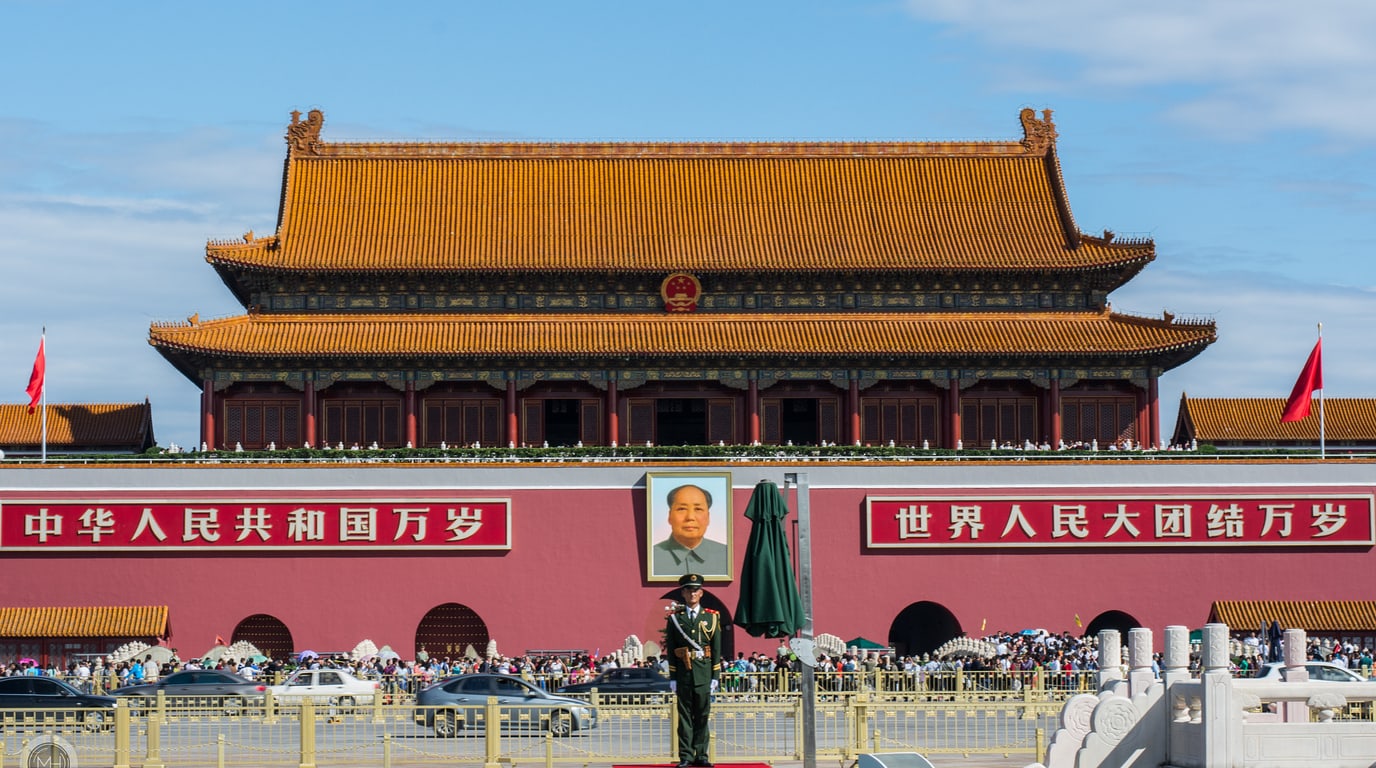
- Tian’anmen Square: the square’s free real-name reservation is operationally separate from Palace Museum admission. Being next door does not merge the checkpoints.
- Temple of Heaven: general park admission is not the same as the combo that includes the Hall of Prayer for Good Harvests, Echo Wall, and Circular Mound Altar. Decide whether you are visiting the park or the interiors.
- Mutianyu: scenic-area admission, internal shuttle, ascent/descent transport, and the trip from central Beijing are separate layers. “Great Wall ticket” may cover only one.
- Terracotta Warriors: use the official Emperor Qinshihuang’s Mausoleum Site Museum real-name reservation with the visitor’s passport. Do not let an English tour listing silently substitute a pickup, guide, or sales service for the museum admission you think you bought.
Five worked examples, checked now
Palace Museum, Beijing
The current official visitor information says there are no same-day tickets and that the museum closes Mondays except statutory holidays. Its international booking information accepts foreign passports and describes advance booking up to seven days ahead, including an official email route requested at least one calendar day in advance.
The safe plan is advance official booking, the same original passport, and the south-side Meridian Gate. Recent travelers have repeatedly described staff-assisted same-day purchases for foreign passports, but this conflicts with the official no-same-day policy. That makes it a capacity-dependent recovery attempt, not a plan and not a promise.
Tian’anmen Square, Beijing
The square is free but requires its own real-name reservation. Beijing’s foreign-visitor help notes that the PC system does not support international phone numbers and describes mini-program or proxy-booking routes. Keep this reservation separate in the ledger even when the square and Palace Museum are on the same morning.
Temple of Heaven, Beijing
The official ticket guide distinguishes park admission from access to the major interior sights and describes advance booking from one to seven days. The 2026 city FAQ confirms what the combo includes. If you only want the morning park atmosphere, general admission may be enough; if the famous ritual architecture is the point, verify the combo before checkout.
Shanghai Museum East, Shanghai
Old reservation advice is now actively unhelpful. Shanghai’s current visitor information says individual visitors no longer need advance reservations, should bring valid ID such as a passport, and use the B1 East Gate near Dingxiang Road. It closes Tuesdays except public holidays and stops admission before closing.
Emperor Qinshihuang’s Mausoleum Site Museum, Xi’an
The museum’s official visitor guide uses real-name reservation for all visitors, accepts a passport as the identity document, and stops sales when daily capacity is reached. Save the museum’s full Chinese identity—秦始皇帝陵博物院—rather than only “Terracotta Army,” which can surface tours, shops, replicas, and pickup points.
When the official path rejects your phone or identity
Do not start by buying the first reseller result. Work down this ladder:
- Look for the venue’s official international website or English-language path.
- Check for an official email, hotline, service window, or foreign-passport instruction.
- Ask your hotel or a trusted local contact to make a proxy reservation only where that route is documented or accepted; give them the exact passport data and inspect the finished order.
- If using an intermediary, identify whether it sells admission or merely a tour/service request. Read the inclusions and cancellation terms before payment.
- Keep a second date or lower-friction venue available until admission is confirmed.
China has directed major attractions to improve foreign-language booking and retain offline counters for inbound visitors, but that is a policy direction, not a guarantee that every counter has inventory or English-speaking staff on your date.
Sold out: use a recovery ladder
“Sold out” should trigger a controlled decision, not a day of random refreshes.
- Verify the official inventory and exact product. The interior add-on may be sold out while the grounds are open—or the reverse.
- Check cancellation inventory through the same official channel. Record when you checked rather than trusting a stale screenshot.
- Use a documented service route. Call, email, or visit an official counter only when the venue describes that path.
- Treat community workarounds as uncertain evidence. Record the report date, passport type, entrance, and whether the traveler actually entered. Never rewrite a few successes as policy.
- Audit a third-party offer. Confirm that it includes admission, names the exact attraction and date, accepts your passport, and explains what happens if the agent cannot secure inventory.
- Activate the fallback. Move the timed anchor, use an exterior or park route, or visit a venue whose current entry model is compatible with the day.
For Beijing, that might mean moving the Palace Museum to another day and using Jingshan, Beihai, a hutong route, or the Great Wall rather than spending the entire morning outside Meridian Gate.
At the gate: carry one offline packet
Keep these together, reachable without mobile data:
- original passport used for the booking;
- screenshot of the passenger identity as entered;
- order number and QR code, if issued;
- Chinese attraction and entrance name;
- booked product and time slot;
- official channel or support contact;
- a sentence showing what went wrong, ready for translation;
- the fallback place in Chinese.
Arrive early enough to use a staffed lane. Security queues, passport handling, a wrong gate, or a separate ticket window can all consume the buffer even when the booking itself is correct.
Design the day around one timed anchor
One identity-bound attraction is enough to structure a half-day. Put flexible places on the same geographic line, not another fragile booking across town. Before finalizing the day, check:
- closure day and public-holiday exception;
- entry cutoff versus closing time;
- one-way entrance and exit;
- realistic security and walking time;
- whether the next meal or transport booking survives a one-hour delay;
- what remains worthwhile if the ticket fails.
The goal is not to reserve the most things. It is to make one important experience executable and keep the rest of the day recoverable.
From guide to map
Review the places from this guide
We keep the Chinese name and city together so you can verify the right branch before opening AMap, Apple Maps, or Didi.
-
Palace Museum via Meridian Gate / 故宫博物院(午门入口)
Beijing · Advance passport booking; south entrance; paid galleries are separate products
-
Tian'anmen Square / 天安门广场
Beijing · Separate free real-name reservation
-
Temple of Heaven east gate / 天坛公园东门
Beijing · Confirm park admission versus the interior-sights combo ticket
-
Shanghai Museum East B1 east gate / 上海博物馆东馆B1东门
Shanghai · Individual visitors currently enter without advance reservation
-
Emperor Qinshihuang's Mausoleum Site Museum / 秦始皇帝陵博物院
Xi'an · Use the official real-name passport reservation
-
Mutianyu Great Wall scenic-area entrance / 慕田峪长城景区
Beijing · Separate admission from shuttle, cable car, toboggan, and city transport
Frequently asked questions
- Do all major attractions in China require advance reservations?
- No. The Palace Museum officially requires advance purchase, Tian'anmen Square uses a separate free real-name reservation, and Shanghai Museum East currently admits individual visitors without advance reservation. Check the exact venue and date rather than applying one rule to every sight.
- Can I book China attraction tickets through Trip.com?
- Sometimes, but first identify what is being sold: official admission, a guide, transport, or an agency service. The Palace Museum says it has not authorized third-party ticket agents, so a reseller listing should never be treated as equivalent to the museum's official inventory. Verify the named attraction, date, passport requirements, inclusions, cancellation terms, and entrance.
- What if the official booking path requires a Chinese phone number or WeChat?
- Look for the attraction's official international website, email, hotline, or documented service window. A hotel or trusted local contact can sometimes make a real-name reservation where the official rules allow proxy booking. Keep the order number and Chinese attraction name outside the mini program.
- Is my passport the attraction ticket?
- Often it is the identity credential used to retrieve or validate a booking, but it is not universally the whole ticket. Some venues also require a QR code, order number, time slot, or separate ticket for paid interiors. Carry the original passport used to book plus an offline confirmation.
- Can foreign visitors buy a sold-out attraction ticket at the gate?
- Do not plan on it. The Palace Museum's official policy says no same-day tickets, although recent foreign-passport travelers have reported capacity-dependent help at the Meridian Gate service window. Treat such reports as an uncertain recovery attempt, never as inventory or guaranteed access.
Sources checked
We use official or first-party sources for rules and fast-changing product details. Community reports shape the failure-mode advice, not the underlying policy.
- Palace Museum — international visitor ticket details
Checked July 12, 2026
- Beijing government — current Palace Museum visitor information
Checked July 12, 2026
- Beijing 12345 — Palace Museum and Tian'anmen booking for foreign visitors
Checked July 12, 2026
- Beijing government — Tian'anmen Square visitor information
Checked July 12, 2026
- Beijing government — Temple of Heaven ticketing
Checked July 12, 2026
- Beijing 12345 — Temple of Heaven combo-ticket inclusions
Checked July 12, 2026
- Shanghai government — Shanghai Museum East visitor information
Checked July 12, 2026
- Emperor Qinshihuang's Mausoleum Site Museum — official visitor guide
Checked July 12, 2026
- State Council — measures to improve attraction access for inbound visitors
Checked July 12, 2026