Transport
China's High-Speed Trains: Booking on 12306 or Trip.com as a Foreigner
How to book Chinese high-speed rail with a foreign passport — 12306 vs Trip.com, seat classes explained, passport gates at stations, and the timing rules that matter.
China Travel Made Easy concierge desk · Last updated · 2 primary sources checked
Decision first
What should I do?
- Best for
- Foreign-passport travelers choosing between direct 12306 booking and a simpler English-language intermediary.
- Do this
- Verify the passenger in 12306 early, compare live availability there, and use the same passport at booking and every station gate.
- Watch for
- The itinerary sheet is not a ticket. Your passport is the travel credential, and some stations still require the staffed gate.
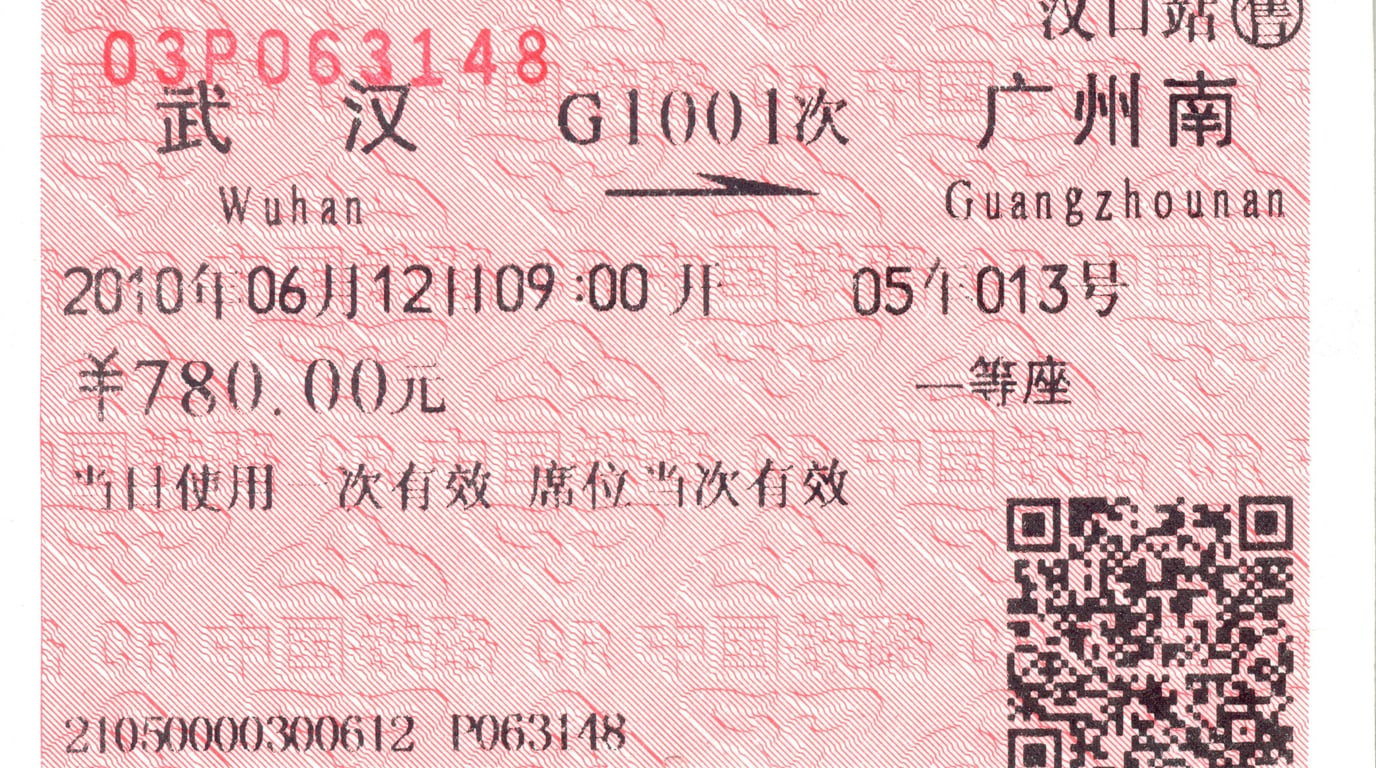
China’s high-speed rail network is the best way to travel between cities: 350 km/h, city-center to city-center, weather-proof, and far more pleasant than domestic flights. Beijing→Shanghai is 4.5 hours; Shanghai→Hangzhou, 45 minutes. The system went fully electronic — your passport is your ticket — and foreigners are better supported than ever. Here’s how it works in practice.
Booking: 12306 vs Trip.com
12306 (the national railway’s official app and website) added a proper English interface and international card payments. It’s free of markups and shows true real-time availability.
- Register with your passport details and a foreign phone number; complete the one-time passenger verification (passport photo upload). Do this days before you need a ticket, since verification can take a few hours.
- Quirks: the English app occasionally reverts bits of UI to Chinese, and payment can be picky with some foreign cards. Alipay-linked payment usually succeeds where direct card entry fails.
Trip.com is the path of least resistance: full English, reliable foreign-card payments, customer service in English, and e-tickets issued to your passport just the same. It charges at most a small service fee (often none). For most first-time visitors I recommend Trip.com for simplicity, with 12306 installed as the backup and for checking live availability.
Either way, every passenger needs their own passport details at booking — tickets are real-name, one per passport.
Timing rules that actually matter
- Sales open 15 days out. For weekend Beijing↔Shanghai, holiday travel, or anything around Golden Week (early October) and Chinese New Year, book the minute sales open. Trip.com will queue a pre-sale reservation and auto-grab.
- Changes/refunds are allowed (fees rise close to departure); easier on the platform where you booked.
- If a train shows sold out, check again ~48 hours and ~24 hours before departure — refund waves release seats. There’s also an official waitlist on 12306 that succeeds surprisingly often.
Seat classes, decoded
| Class | Layout | Worth it when |
|---|---|---|
| Second class (二等座) | 3+2 | Default. Comfortable for rides up to ~4h |
| First class (一等座) | 2+2 | Longer rides; ~50–70% price premium |
| Business class (商务座) | 1+2 lie-flat | Splurge; often 3× second class |
| Sleepers (older D/Z trains) | Bunks | Overnight routes; book early |
G = fastest high-speed, D = high-speed/EMU slightly slower, C = intercity shuttle, K/T/Z = conventional and overnight trains. For tourists, G and D trains cover virtually every itinerary.
At the station: a walkthrough
Chinese stations work like airports; the scale surprises people.
- Arrive 40–60 minutes early. Entry requires a passport check and an X-ray of all luggage. Lines at big-city stations are long but fast-moving.
- Station entry: show your passport at the entrance (newer gates read the chip automatically; otherwise a staffed lane).
- Find your gate on the departure boards — they cycle to English. Boarding (检票) opens ~15 minutes before departure and closes 5 minutes before.
- Ticket gates: Chinese ID holders tap; you either use a passport-reading gate (increasingly common at major stations) or the staffed manual channel at the end — hold out your passport, get scanned or waved through.
- Platform and seat: car numbers are marked on the platform floor; your e-ticket (in the app or Trip.com confirmation) shows car and seat, e.g., Car 07, Seat 12F.
No paper involved at any point. If you love souvenirs, ticket machines can print a reimbursement slip (报销凭证) which looks like a classic ticket.
On board
Power at every seat (USB-A and/or outlets), generous luggage racks at carriage ends (big suitcases fine), a dining car/snack trolley, boiled-water dispensers (locals bring instant noodles; join them), and Western + squat toilets. Seats face direction of travel and can rotate in pairs. Announcements are bilingual on major routes.
Honest caveats
- Stations are huge and taxis queue badly. Add 30 minutes more buffer than feels necessary, especially at Beijing South, Shanghai Hongqiao, and Guangzhou South.
- Luggage rules: no formal weight checks, but oversized items (full-size surfboards, giant boxes) can be refused at security.
- Holiday crush is real. Avoid traveling the first and last two days of Golden Week and Chinese New Year if remotely possible.
- The overnight sleeper network is charming but aging; for first-timers on a 7–10 day trip, daytime G trains are almost always the better experience.
Once you’ve done one ride, you’ll plan the rest of your trip around the trains — that’s the correct response.
Frequently asked questions
- Can foreigners book Chinese train tickets online?
- Yes, two good ways: the official 12306 app/website, which has an English version and accepts foreign passports and international cards, or Trip.com, which has smoother English UX for a small or zero service fee. Both issue e-tickets tied to your passport — there is no paper ticket to collect.
- How do I get through the station gates without a Chinese ID card?
- Chinese citizens tap ID cards on the automatic gates. Foreign passports work on a growing number of newer gates with passport readers; where they don't, use the staffed manual channel at the end of the gate row — show your passport and the attendant waves you through in seconds.
- How far in advance do Chinese train tickets go on sale?
- 15 days before departure (occasionally adjusted around holidays). Popular intercity routes on weekends and any travel near Chinese public holidays sell out quickly — set a reminder for the on-sale date.
- What's the difference between G, D, and other train types?
- G trains are the fastest high-speed services (up to 350 km/h), D trains are slightly slower high-speed/EMU services, C trains are short intercity runs. Letters like K, T, Z denote older conventional trains, including overnight sleepers — much cheaper and much slower.
- Is second class on Chinese high-speed trains comfortable enough?
- Yes — second class is roughly equivalent to economy on a good European train: 3+2 seating, decent legroom, power outlets, and a quiet, smooth ride. First class (2+2) is worth it on rides over 4 hours; business class is a lie-flat splurge.
Sources checked
We use official or first-party sources for rules and fast-changing product details. Community reports shape the failure-mode advice, not the underlying policy.
- China Railway 12306 English FAQ
Checked July 12, 2026
- State Council guide for foreign travelers in China
Checked July 12, 2026