Visas & Entry
China Visa-Free Entry & 240-Hour Transit in 2026: Who Qualifies
Which passports can enter China without a visa in 2026, how the 240-hour (10-day) visa-free transit works for Americans, Brits, and Canadians, and the rules that trip people up.
China Travel Made Easy concierge desk · Last updated · 1 primary source checked
Decision first
What should I do?
- Best for
- Travelers deciding whether a normal visa-free entry, 240-hour transit, or an L visa fits their exact passport and route.
- Do this
- Write your trip as A → mainland China → C. If using transit, confirm A and C are different countries or regions and keep the onward ticket handy.
- Watch for
- Passport lists, eligible ports, and trial end dates change. Re-check the official NIA page the week you book and again before departure.
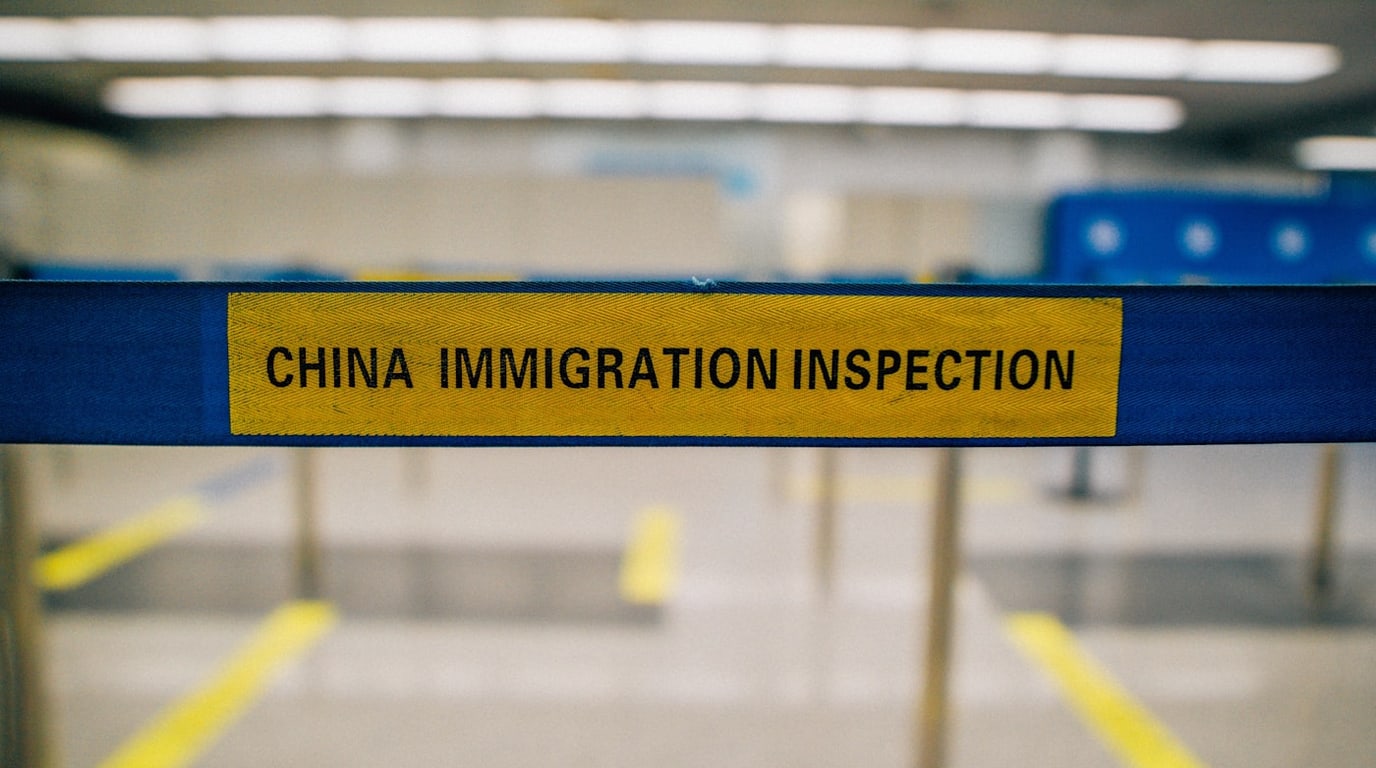
China spent 2023–2025 progressively flinging its doors open, and 2026 is the easiest year to enter in decades. There are two main visa-free tracks, and most Western travelers fit one of them. This is the one topic where you must double-check official sources — the lists change several times a year.
Track 1: 30-day unilateral visa-free entry
China has been granting ordinary-passport holders from a growing list of countries visa-free stays of up to 30 days for tourism, business, family visits, and transit. As of my last verification (mid-2026), the list includes, broadly:
- Most of Europe: France, Germany, Italy, Spain, Netherlands, Switzerland, Ireland, Austria, Belgium, Luxembourg, Hungary, Poland, Portugal, Greece, the Nordic countries (Norway, Finland, Denmark, Iceland, with Sweden added in late 2025), and more.
- Asia-Pacific: Australia, New Zealand, Japan (restored Nov 2024), South Korea (added on a trial basis in late 2025), Malaysia, Singapore and Thailand under mutual agreements.
- Latin America & Gulf: Brazil, Argentina, Chile, Peru, Uruguay (trial began mid-2025), plus mutual visa-free arrangements with the UAE and Qatar.
Notably not on the unilateral list: the United States, United Kingdom, Canada, India. Those travelers use Track 2.
Rules of thumb for Track 1: 30 days per entry, no advance registration, standard immigration lanes, onward/return ticket and hotel details may be asked for. Many of the trial policies are currently announced through December 31, 2026 — if you’re traveling late in the year, confirm yours hasn’t lapsed.
Track 2: 240-hour (10-day) visa-free transit
Effective December 17, 2024, China extended its old 72/144-hour transit policy to 240 hours. The National Immigration Administration’s current policy page, updated July 4, 2025, lists 65 ports in 24 provincial-level regions and 55 eligible countries, including the US, UK, Canada, and most of Europe. Those counts supersede older pages that still say 60 ports and 54 countries.
The non-negotiable mechanics:
- Three points, two different endpoints. You must travel A → China → C, where C is a different country or region than A. US → Beijing → US does not qualify. US → Beijing → Hong Kong does; so does UK → Shanghai → Japan.
- Onward ticket in hand. A confirmed seat (flight, or international train/ship at some ports) leaving within 240 hours of arrival. Immigration checks it.
- Dedicated counter. At arrival, find the “24/240-hour visa-free transit” desk — don’t queue in the regular lane. You’ll fill a short arrival form and get a temporary entry permit in your passport. Budget an extra 30–60 minutes.
- Stay within the permitted area — with 24 provinces covered (Beijing, Shanghai, Guangdong, Jiangsu, Zhejiang, Sichuan, etc.), cross-province travel between covered regions is allowed. The classic Beijing → Xi’an → Shanghai loop fits comfortably.
- The clock starts at 00:00 the day after entry, so you effectively get a few bonus hours.
Designing a qualifying itinerary
The Hong Kong trick is the workhorse: fly home-country → mainland China, spend up to 10 days, exit to Hong Kong (counts as a different region), then fly home from there — often on the same airline alliance. Other popular triangles: adding Seoul, Tokyo, Singapore, or Bangkok on either end.
If neither track fits: the L visa
Staying longer than your visa-free window, or flying a simple round trip from a Track-2 country? You need a tourist (L) visa from a Chinese embassy/consulate or visa center. The process got friendlier post-2023: most applicants no longer need flight/hotel bookings upfront or an in-person interview, fees were cut, and 10-year multi-entry visas are again routinely issued to US citizens. Processing is typically about a week.
Things that trip people up
- Visa-free ≠ unlimited activities. Tourism, business meetings, family visits: fine. Working or studying: not fine.
- Accommodation registration still applies — hotels register you automatically. If you stay in a private home, register within 24 hours; a March 2026 online pilot now covers seven provincial-level regions, while other locations still use local public-security channels. See the hotels guide.
- Regional add-ons exist: Hainan island has its own 30-day visa-free scheme covering more nationalities, and there are special policies for ASEAN tour groups into Guilin, cruise arrivals, and Greater Bay Area tour groups. Niche, but useful if you fit one.
- Airlines are the first checkpoint. Check-in agents sometimes know the transit rules imperfectly; carry a printout of your onward ticket and, if helpful, the NIA’s English announcement of the 240-hour policy.
Where to verify (do this before booking)
- National Immigration Administration (NIA) — use the linked policy in “Sources checked” below for the current eligible countries, ports, and permitted areas.
- Your nearest Chinese embassy/consulate website — the country lists are mirrored there in English.
- Trip.com and airline check-in pages increasingly flag transit eligibility, but treat them as a convenience, not the authority.
As of mid-2026 the trend is consistently toward more openness — but every list above has an expiry date attached somewhere. Check your specific passport against an official source the same week you book flights.
Frequently asked questions
- Do US citizens need a visa to visit China in 2026?
- For a normal vacation, usually not — US passport holders qualify for the 240-hour (10-day) visa-free transit if they arrive from one country and depart to a different country or region (Hong Kong, Macau, and Taiwan count). For stays over 10 days or simple round trips from/to the US only, a tourist (L) visa is required.
- Which countries can enter China visa-free for 30 days?
- The unilateral and mutual visa-free lists change often and have different end dates. Many European and Asia-Pacific passports qualify, while the US and Canada generally rely on the transit policy. Use the National Immigration Administration or your local Chinese embassy's current passport list rather than a copied blog list.
- How does the 240-hour visa-free transit actually work?
- You must arrive from country/region A and hold a confirmed onward ticket departing within 240 hours to country/region C, where C is different from A. At immigration you use the dedicated TWOV counter, show the onward ticket, and receive a temporary entry permit. You can move between the 24 covered provinces during your stay.
- Does Hong Kong count as a different destination for visa-free transit?
- Yes. Hong Kong, Macau, and Taiwan are treated as separate regions for transit purposes, so US → Shanghai → Hong Kong qualifies, which makes a mainland-plus-Hong-Kong itinerary the classic visa-free routing for Americans.
- Can I extend a visa-free stay once I'm in China?
- Practically, no. Plan to leave within your permitted window; overstaying triggers fines and can affect future entry. If you might need longer, apply for an L visa before traveling.
Sources checked
We use official or first-party sources for rules and fast-changing product details. Community reports shape the failure-mode advice, not the underlying policy.
- National Immigration Administration: Visa-Free Transit Policies
Checked July 12, 2026