Transport
China Maps, Didi, and Metro: Get the Right Pin, Exit, and Pickup
A provider-aware workflow for turning an English travel tip into the correct Chinese POI, then reaching it by AMap, Didi, metro, or a staffed fallback.
China Travel Made Easy concierge desk · Last updated · 5 primary sources checked
Decision first
What should I do?
- Best for
- Independent travelers using an overseas iPhone or Android phone without fluent Mandarin.
- Do this
- Resolve every important destination to a Chinese name, city, branch or terminal, and entrance before opening AMap, Didi, or a metro route.
- Watch for
- English search, transit QR codes, foreign-card acceptance, last trains, and pickup bays vary by provider, city, station, and app state.
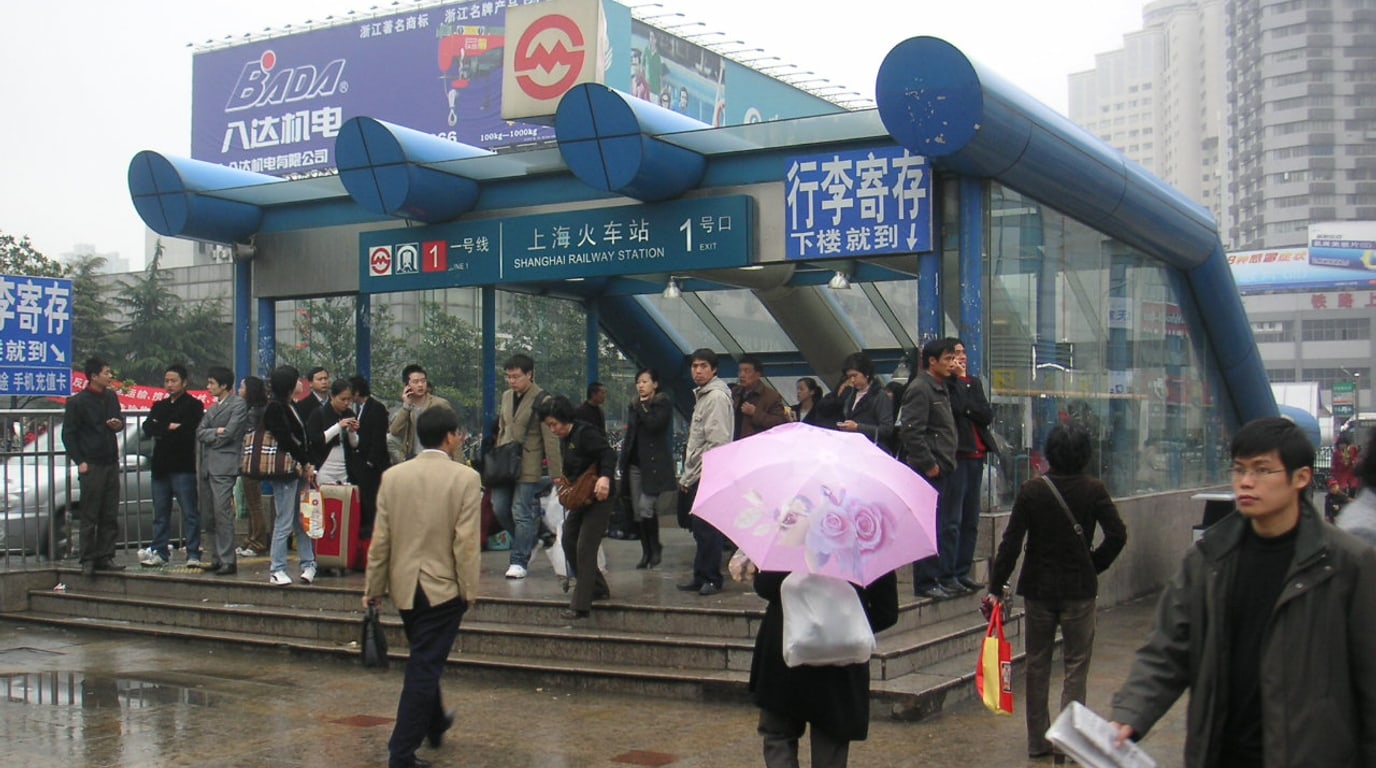
The difficult part of getting around China is rarely the train or car. It is place identity.
A recommendation may say “the Shanghai museum,” a hotel’s English brand, or “the station near the airport.” The transport app needs the correct Chinese POI, city, branch, terminal, and sometimes one particular entrance. If that identity is wrong, perfect navigation takes you efficiently to the wrong place.
Use this sequence:
source tip → Chinese place identity → city and branch → provider match → entrance or pickup → route
First resolve the place, then choose transport
Before saving an important destination, collect five fields:
- English name — useful for you, but not sufficient.
- Chinese name — copy the establishment’s or provider’s version; do not invent a translation.
- City and district — especially for chains and similarly named attractions.
- Branch, station, terminal, or gate — the field most travel posts omit.
- Evidence — the source caption, official address, booking, storefront, or provider result that justifies the match.
Compare the address and category in the map result. A restaurant, mall, hotel, railway station, metro station, and scenic-area entrance can share similar names while being operationally different destinations.
Three identity mistakes that cost real time
- Station family: Beijing Railway Station, Beijing West, Beijing South, Beijing North, and Beijing Chaoyang are different intercity stations—not entrances to one complex.
- Airport family: Chengdu Tianfu and Chengdu Shuangliu are far apart. “Chengdu airport” is not a usable ride request.
- Attraction versus entrance: a scenic area’s map center, ticket gate, cable-car base, parking transfer, and hotel entrance may be kilometers apart.
If a tip does not supply the missing branch or city, keep it as needs review. Do not reward uncertainty with a confident-looking pin.
Map setup: make AMap the execution layer
AMap Global: default for mainland execution
AMap Global (高德地图) is available on overseas app stores for iPhone and Android. Its current product supports English and additional languages, local POI descriptions, walking and public-transport routes, live traffic, and an English ride-hailing interface.
That does not eliminate identity work. Translated names can be incomplete, unfamiliar, or shared by several branches. For anything time-critical:
- search the English name and city;
- search the Chinese name;
- compare district, category, photos, and address;
- save the result only when those fields agree;
- retain the Chinese query outside the app.
On Android, AMap Global is the practical local-map default. On iPhone, Apple Maps can provide a second route or provider result, but use the exact Chinese identity in both rather than assuming two similar English labels represent the same POI.
Treat Google or social-map links as source evidence
A Google Maps link, Instagram tag, TikTok caption, or creator collection may be valuable discovery evidence. It is not automatically the execution pin for mainland China.
Preserve the original link, then resolve the place again in AMap or another locally useful provider. This separation is the core product workflow: the discovery source explains why you care; the local map identity gets you there.
Didi: resolve both ends of the ride
Current official visitor guidance supports three entry paths:
- Alipay: Transport → Taxi or Ride-hailing;
- WeChat: Services → Mobility or Ride Hailing;
- Didi-Greater China: foreign mobile-number registration and international credit-card support.
Choose the one that is already authenticated and payable on your phone. Do not assume the mini-program and standalone app expose identical features or saved places.
Before tapping request
- Confirm the pickup pin is on your side of the road or complex.
- Read the pickup label for a door, floor, bay, parking area, or landmark.
- Confirm the destination’s Chinese name and branch.
- Screenshot the driver plate and pickup text if your connection is unstable.
- Keep the destination’s Chinese address ready for chat or a staffed fallback.
At airports, railway stations, malls, hospitals, and large attractions, the blue dot is not enough. These places commonly separate ride-hailing, taxi, private-car, and drop-off traffic.
Useful messages:
- 我在这个上车点。— I am at this pickup point.
- 我不会说中文,请发信息。— I do not speak Chinese; please send a message.
- 请送我到这个地址。— Please take me to this address.
- 我找不到上车点。— I cannot find the pickup point.
Match the license plate before entering. If the driver calls and neither side can establish the pickup, use in-app text, ask station staff to read the pickup label, or cancel according to the app’s displayed terms and move to a staffed official taxi queue.
Metro: the system is local even when Alipay is the front door
The State Council’s visitor guidance describes Alipay transport setup as:
- open Transport;
- select the city;
- choose the relevant metro or bus product;
- complete identity verification if requested;
- scan the QR code at entry and exit gates as required.
The credential belongs to the local transport system. Recent traveler reports describe separate bus and metro cards, combined cards in some cities, partially translated interfaces, and setup that only finishes after arrival. That is a failure mode, not evidence that transit itself is inaccessible.
Use this payment ladder
- Explicitly supported foreign-card tap. Beijing currently permits contactless Mastercard and Visa cards issued overseas at subway gates. Use the same card or device at entry and exit.
- City-specific Alipay or WeChat QR. Select the city and correct transport mode; do not show a merchant-payment QR to a transit gate.
- Staffed counter or ticket machine. Official national guidance says metros provide single-journey tickets and transit cards, with locally available combinations of cash, bank card, and mobile payment.
- Physical transit card. Useful for travelers who prefer a phone-independent fallback, but purchase, deposit, refund, and recharge rules are local.
Do not describe any one fallback as universal. Read the logos on the gate or machine and ask the staffed counter what that system accepts today.
The exit is part of the destination
Large stations span several blocks and may connect to malls, railway terminals, or underground passages. Save:
- line and direction;
- transfer station;
- destination station;
- exit number or letter;
- the walk from that exit to the actual entrance.
Recheck the final train in the local route planner on the day of travel. Operating hours vary by line, direction, station, date, and service change; “metros run until 11” is not a safe planning rule.
Airports and railway stations: a five-minute identity check
Before departing for a terminal, compare the booking with the map:
| Booking field | Map field to confirm |
|---|---|
| Airport name | Chinese airport name and IATA code |
| Terminal | Terminal number or letter |
| Railway station | Full Chinese station name ending in 站 |
| Departure time | Current route and last useful metro or airport train |
| Pickup/drop-off | Door, level, lot, or official taxi area |
For intercity rail, your passport is tied to one named station and departure. A map search for the city center is not a route to the train.
Recovery table
| Failure | Immediate recovery | What not to assume |
|---|---|---|
| English search returns several branches | Paste the Chinese name plus city or district; compare category and address. | The first or closest result is correct. |
| AMap English mode hides a feature | Preserve the Chinese query; try the current Global app, provider search, or a second local map. | Every Chinese-mode function has an English equivalent. |
| Alipay transport QR is missing | Confirm mainland city and mode after arrival; ask the station counter for today’s supported payment. | One QR works across every city and mode. |
| Foreign bank-card tap fails | Use the city QR, staffed counter, ticket machine, or cash/card option shown locally. | A supported card network means every gate accepts that card. |
| Didi driver cannot find you | Send the pickup label, move only to the marked bay, or ask staff; otherwise use the official taxi queue. | The driver can reach your blue-dot location. |
| Destination pin and booking disagree | Stop and call the hotel, venue, or booking platform using the saved Chinese identity. | The map pin is more authoritative than the booking address. |
| Phone or data fails | Show the offline Chinese destination card and use a staffed counter or taxi queue. | A digital convenience is an independent backup. |
The map-ready handoff to keep offline
For every hotel, station, airport, and timed attraction, save this compact record:
English name:
中文名:
City / district:
Branch / terminal:
Full Chinese address:
Entrance / pickup point:
AMap result checked:
Apple Maps result checked (if used):
Source evidence:
Needs manual verification:
This is more useful than a long itinerary generated from weak pins. Once the identities are correct, route planning becomes the easy part.
From guide to map
Review the places from this guide
We keep the Chinese name and city together so you can verify the right branch before opening AMap, Apple Maps, or Didi.
-
Beijing South Railway Station / 北京南站
Beijing · Do not confuse it with Beijing Railway Station, Beijing West, Beijing North, or Beijing Chaoyang.
-
Shanghai Hongqiao Railway Station / 上海虹桥站
Shanghai · Confirm railway station versus adjacent airport terminal and the correct pickup level.
-
Chengdu Tianfu International Airport / 成都天府国际机场
Chengdu · Keep Tianfu and Shuangliu airports distinct; add the flight terminal before requesting a ride.
-
Xi'an North Railway Station / 西安北站
Xi'an · Use the north-station identity and the pickup or metro entrance shown for your current side of the complex.
Frequently asked questions
- Can I use Didi without a Chinese phone number?
- Official visitor guidance says the Didi-Greater China app supports registration with foreign mobile numbers and international credit cards. Travelers can also request online ride-hailing through Alipay or WeChat. Registration is only half the task: verify the pickup and destination pins before requesting the car.
- What is the most reliable map app for mainland China?
- Use AMap Global as the mainland execution default on iPhone or Android, with Apple Maps as a useful second check on iPhone. Even in English mode, search with the Chinese name and city when a branch, hotel, station, or entrance matters.
- Can every Chinese metro use the same Alipay QR code?
- No. Alipay provides city-specific transport credentials, and some cities separate bus and metro products. Select the correct city and mode, complete any identity step, and activate it after arrival. If it fails, use that system’s staffed counter, ticket machine, accepted bank card, or physical card.
- Can I tap a foreign bank card at metro gates?
- Only rely on this where the local operator explicitly supports it. Beijing currently allows contactless Mastercard and Visa cards issued overseas across its subway network. Other systems and gates differ, so keep a station-counter or single-ticket fallback.
- How should I handle airport or railway-station Didi pickup?
- First resolve the exact terminal or station. After requesting the ride, follow the app’s designated pickup bay, floor, door, or parking area and match the license plate. If the pickup remains unclear, return to a staffed information point or use the official taxi queue instead of moving toward an unsolicited driver.
Sources checked
We use official or first-party sources for rules and fast-changing product details. Community reports shape the failure-mode advice, not the underlying policy.
- State Council — 2025 transport guidance for foreign travelers
Checked July 12, 2026
- Beijing government — foreign Visa and Mastercard subway access
Checked July 12, 2026
- Shanghai government — AMap English launch
Checked July 12, 2026
- Shanghai government — AMap multilingual and ride-hailing functions
Checked July 12, 2026
- AMap Global — current Android product listing
Checked July 12, 2026