Places
China Neighborhood Walks: Public Routes, Residential Boundaries & Reliable Exits
Turn a hutong, longtang, park, or neighborhood video into a bounded public walk in Beijing, Shanghai, or Chengdu—with bilingual anchors, exit plans, mobility notes, and resident-first photography rules.
China Travel Made Easy concierge desk · Last updated · 7 primary sources checked
Decision first
What should I do?
- Best for
- Travelers who want everyday street texture without turning residential life into an attraction, and people converting a short-form neighborhood video into a route they can safely finish.
- Do this
- Choose a named public start, two or three public anchors, a time limit, and a staffed transit or pickup exit; keep private courtyards, residential compounds, faces, children, and personal notices outside the capture plan unless explicit permission is given.
- Watch for
- A district location tag is not a route, an open gate is not public access, a visible resident is not consent, and 'authentic' does not prove that a lane is legal, accessible, welcoming, or useful to enter.
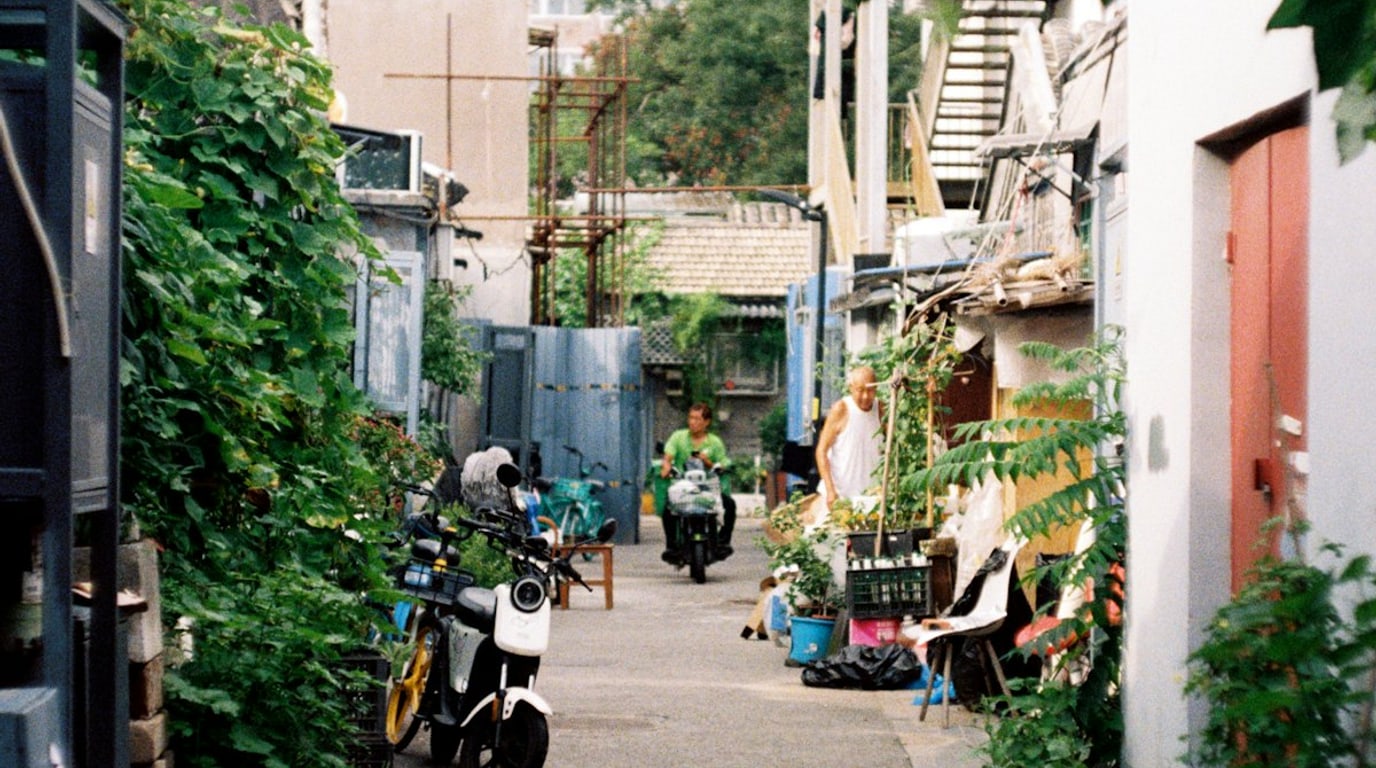
A neighborhood video is usually strong evidence of atmosphere and weak evidence of access. The camera may cross a courtyard threshold, cut out a long walk, hide stairs, or show a resident who never agreed to become a destination. “Go here and wander” transfers that uncertainty to the traveler.
A useful neighborhood guide builds a small public route:
public start → two or three named anchors → seated or staffed pause → reliable exit
It also states what remains out of scope. The product should never turn laundry, an open front door, a child, a mahjong table, or a matchmaking notice into a pin.
Resolve the video before drawing the route
Classify every extracted object:
| Video evidence | Map treatment | Why |
|---|---|---|
| “Beijing hutongs” location tag | City-level idea only | Too broad to route or verify access |
Named public lane such as 五道营胡同 | Route anchor | The street identity is resolvable |
| Museum, park, café, shop, or metro station | Exact place candidate | Verify Chinese name, branch, entrance, and hours |
| Unnamed doorway, courtyard, longtang gate, or shortcut | Do not pin | Public access and identity are unknown |
| Resident, exercise group, market vendor, or personal notice | Context only | A person is not a destination or reusable media asset |
Keep the evidence record practical:
Source and date:
Public place claim:
English / official Chinese identity:
City, district, entrance, or street number:
Public access evidence:
Surface, steps, toilet, seating, shade, and traffic notes:
Start / pause / exit role:
Opening or reservation checked:
Resolution — resolved / probable / unresolved:
If the video shows a “hidden lane” but supplies no readable street sign, storefront, or city context, it remains an unresolved scene. Do not attach it to the nearest famous hutong.
Beijing: learn the courtyard form without entering a home
Public interpretation route
Start at Shijia Hutong Museum / 史家胡同博物馆, a public museum at No. 24 Shijia Hutong that Beijing describes as a space for interpreting hutong history and resident memory. Check its current opening and reservation instructions before leaving; city listings have shown limited daytime hours and Monday closure.
The museum is the right place to study courtyard layouts, household objects, and neighborhood change. It removes the false choice between understanding domestic architecture and peering into a private courtyard.
After the museum, keep to public streets and choose one staffed café, bookstore, or transit point as the exit. Do not use “open courtyard” as a discovery filter. Doorways may serve multiple homes, deliveries, toilets, bicycles, or businesses even when they look picturesque.
Wudaoying–Chengxian public-lane walk
Wudaoying Hutong / 五道营胡同 is a named public lane with shops and cafés. Beijing’s official route material describes it as a 632-metre lane and pairs it with Chengxian Street / 成贤街, the historic street by the Confucian Temple and Imperial College.
Use Wudaoying as the public start and Chengxian Street as the second anchor. Decide before arrival whether the ticketed temple complex is part of the plan; a street walk and attraction visit are different products. End at a metro entrance or a verified Didi pickup point rather than assuming every hutong mouth is a good vehicle stop.
This is a commercial-historic walk, not an “untouched local secret.” That honesty helps: cafés can provide seating and toilets, while narrow curbs, deliveries, parked bikes, and crowds still need to be checked on the day.
Bell Tower route
For a compact old-city loop, use Beijing Drum and Bell Towers / 北京钟鼓楼 as the public landmark. Beijing has published a roughly 1.3-kilometre route through named surrounding lanes, including Zhongku, Lingdang, Caochang North, Zhonglouwan, Doufuchi, and Yuge hutongs.
The surrounding street route is public; climbing either tower is a separate ticketed attraction with opening and last-entry times. Save the tower entrance, not just the district label 钟鼓楼. If steps or height are unsuitable, keep the square and street loop and omit tower entry.
Shanghai: give the famous photo route two exits
Shanghai’s official citywalk starts at Jiaotong University Metro Station / 交通大学站, passes Wukang Building / 武康大楼 and Anfu Road / 安福路, and ends at Changshu Road Metro Station / 常熟路站. The published version can take four to six hours because it includes many shops and former residences.
Build the shorter version around the public street rather than every viral storefront:
- Start at Jiaotong University station and confirm the exit that minimizes road crossings.
- View Wukang Building from the public pavement without blocking the junction or photographing through occupied windows.
- Continue along a chosen Wukang–Anfu segment, saving only shops or museums you genuinely plan to enter.
- Exit at Changshu Road station, or set a named staffed venue as the pickup point if fatigue, heat, rain, or crowds shorten the walk.
Wukang–Anfu is now a major shopping and social-media destination; Shanghai’s own material describes heavy footfall and frequent commercial openings. Do not sell it as an undiscovered residential neighborhood. Its value is a concentrated public architecture-and-retail walk with good exit options.
For a seated green pause, Fuxing Park / 复兴公园 is a separate exact destination at 105 Yandang Road. Shanghai’s official listing currently gives daily hours and free admission, but verify again for the trip date. Park activity varies by weather, season, enforcement, and who happens to be there; no guide can promise a choir, dance, tai chi group, or matchmaking gathering.
Chengdu: community street versus park experience
GoChengdu’s visitor guide identifies Yulin North Road Community / 玉林北路社区 as a place for public street life, bookstores, cafés, art, and food. Save that as a neighborhood anchor, then resolve the actual bookstore, café, market, or restaurant separately. “Yulin” alone can refer to a broad area and should not be presented as one pin.
Use public commercial streets and a named staffed stop. Do not follow a video into an apartment compound, residential stairwell, community room, mahjong space, or market back area unless it is clearly open as a business or public event. Set the return pickup at a main road or verified venue rather than an internal lane.
Chengdu People’s Park / 成都人民公园 is a different experience. It is a public park containing paths, teahouses, services, and changing social activity. The park pin does not resolve Heming Tea House, an ear-cleaning provider, a performance, or a matchmaking area; each claim needs its own identity and current context.
Treat matchmaking notices as personal information, not cultural décor. Do not photograph or transcribe age, income, property, phone, or family details. Watching from a respectful distance does not require turning a real family’s search into content.
Wet markets are businesses, not “groceries as theater”
Do not send a traveler to “any wet market.” Resolve the exact market, official Chinese name, public entrance, operating period, and whether photography is permitted. A generic map search can land at a wholesale facility, staff entrance, relocated market, or residential produce shop.
Inside a public market:
- keep aisles, scales, payment points, and scooter paths clear;
- ask before photographing a person, stall display, price board, preparation area, or live animal;
- do not handle food or equipment without invitation;
- buying something is optional and does not purchase consent to film;
- confirm weight, unit, and total before paying;
- leave if staff say no, signage prohibits photography, or the space is too busy to stand safely.
A useful contribution records access, entrance, hours checked, surface, crowding, payment method, and whether photography was allowed. “Felt authentic” is not execution evidence.
Park activity is not an open workshop
Morning and evening activity varies enormously. A park can contain exercise groups, choirs, dancing, games, water calligraphy, family gatherings, or none of them. Weather, holidays, local rules, and group routines matter more than a national “6–10am” promise.
Stay outside the activity footprint. Watch without blocking paths or seats. Join only after a clear invitation from an organizer or participant; being waved around an obstruction is not an invitation. Ask before recording identifiable faces or audio, and do not assume a public performance permits commercial reuse.
If the experience depends on a particular activity, treat it as unconfirmed until a current local source or organizer verifies the time. Keep the park itself as the pin and the activity as a dated claim.
Build the route for the least mobile moment
Historic streets can look flat on a map while remaining difficult in practice. Curbs, uneven paving, bollards, parked scooters, narrow passages, tower stairs, rain, heat, toilets, and scarce seating can change a short route.
Before leaving:
- Keep the route to two or three public anchors in one district.
- Check weather, daylight, attraction hours, and the exact station exits.
- Verify a step-free entrance and toilet directly if either is essential; do not infer them from a general accessibility icon.
- Add a seated staffed pause with an address you can show.
- Save the hotel card and a Chinese Didi pickup point on a main road.
- Share the route and expected return time when walking alone.
- Turn back at the time limit even if the social feed suggests one more “hidden” stop.
The goal is not to get lost. It is to notice a city while preserving the ability to leave—and without making someone else’s front door part of the itinerary.
From guide to map
Review the places from this guide
We keep the Chinese name and city together so you can verify the right branch before opening AMap, Apple Maps, or Didi.
-
Shijia Hutong Museum / 史家胡同博物馆
Beijing · Public interpretation anchor at No. 24 Shijia Hutong; check current opening and reservation instructions
-
Wudaoying Hutong / 五道营胡同
Beijing · Named public commercial lane; not permission to enter adjoining courtyards
-
Beijing Drum and Bell Towers / 北京钟鼓楼
Beijing · Public landmark and route anchor; ticketed tower entry is separate from the surrounding street walk
-
Wukang Building / 武康大楼
Shanghai · Public-street architecture anchor; the building remains occupied
-
Anfu Road / 安福路
Shanghai · Public shopping and citywalk street, not a residential-compound invitation
-
Fuxing Park / 复兴公园
Shanghai · Public park at 105 Yandang Road; check current hours and activity conditions
-
Yulin North Road Community / 玉林北路社区
Chengdu · Neighborhood route anchor; resolve each venue and keep residential interiors out of scope
-
Chengdu People's Park / 成都人民公园
Chengdu · Public park anchor; teahouse, matchmaking area, and other services are separate experiences
Frequently asked questions
- Can I enter hutong courtyards or Shanghai longtang compounds?
- Not unless the space is clearly a public museum, business, booked accommodation, or an occupant explicitly invites you in. An open gate, a location tag, or another creator entering does not establish public access. Keep the route on public streets and use public interpretation sites such as Shijia Hutong Museum to understand residential architecture.
- How do I turn a neighborhood TikTok or Instagram Reel into a usable walk?
- Extract only named public streets, parks, museums, shops, and transit points. Resolve their official Chinese names and city, then choose a start, no more than three anchors, a duration, and a staffed exit. Keep generic ambience, private doors, residents, and unverified shortcuts as source evidence—not map pins.
- May I photograph people, homes, market stalls, or matchmaking notices?
- Default to wide public-street scenes that do not isolate a person or expose a home. Ask for an affirmative response before a close portrait, child photo, stall close-up, doorway view, or personal notice. A matchmaking sheet can contain age, income, property, and contact details; do not publish or transcribe it without permission.
- Can I join tai chi, dancing, singing, or another park group?
- Watch from outside the activity space unless the organizer or participants clearly invite you. Public performance is not blanket permission to join, record faces, or interrupt instruction. Keep paths clear and treat a refusal or lack of response as no.
- Are neighborhood walks accessible for wheelchair users or travelers who tire easily?
- Conditions vary block by block. Historic lanes can have uneven paving, curbs, parked scooters, narrow passages, stairs, and limited seating. Build a short public-street route, verify step-free entrances and toilets for the exact day, include a seated staffed stop, and keep a Chinese pickup point for an early exit.
Sources checked
We use official or first-party sources for rules and fast-changing product details. Community reports shape the failure-mode advice, not the underlying policy.
- Beijing municipal portal — official Dongcheng cultural route through Shijia Hutong Museum, Wudaoying and Chengxian Street
Checked July 12, 2026
- Beijing municipal portal — 1.3 km Bell Tower hutong route
Checked July 12, 2026
- Beijing municipal portal — Shijia Hutong Museum as a public interpretation space
Checked July 12, 2026
- Shanghai municipal portal — Wukang Building and Anfu Road citywalk
Checked July 12, 2026
- Shanghai municipal portal — Wukang Road–Anfu Road block
Checked July 12, 2026
- Shanghai municipal portal — Fuxing Park address and current opening information
Checked July 12, 2026
- GoChengdu official visitor guide — Yulin North Road community and People's Park
Checked July 12, 2026