Food
Tea in China: Teahouse Sessions, Tea-Country Routes & Buying Without Guesswork
Choose the right tea experience in Chengdu, Hangzhou, or Beijing; resolve clips to bilingual places; confirm every charge before brewing; and buy tea with a return-country plan.
China Travel Made Easy concierge desk · Last updated · 9 primary sources checked
Decision first
What should I do?
- Best for
- Visitors choosing between a relaxed teahouse stop, a tea-growing landscape, and a serious tea-shopping trip—and anyone turning a tea video into the correct venue.
- Do this
- Decide which experience you want, save the official Chinese venue or district identity, and confirm the tea, weight, service format, room or seat charge, refills, minimum purchase, and total before anything is brewed or opened.
- Watch for
- A village is not a teahouse, a hosted tasting may be a sales appointment, prices are not comparable without weight and grade, and an invitation from a stranger to their chosen venue matches a documented tea-ceremony scam pattern.
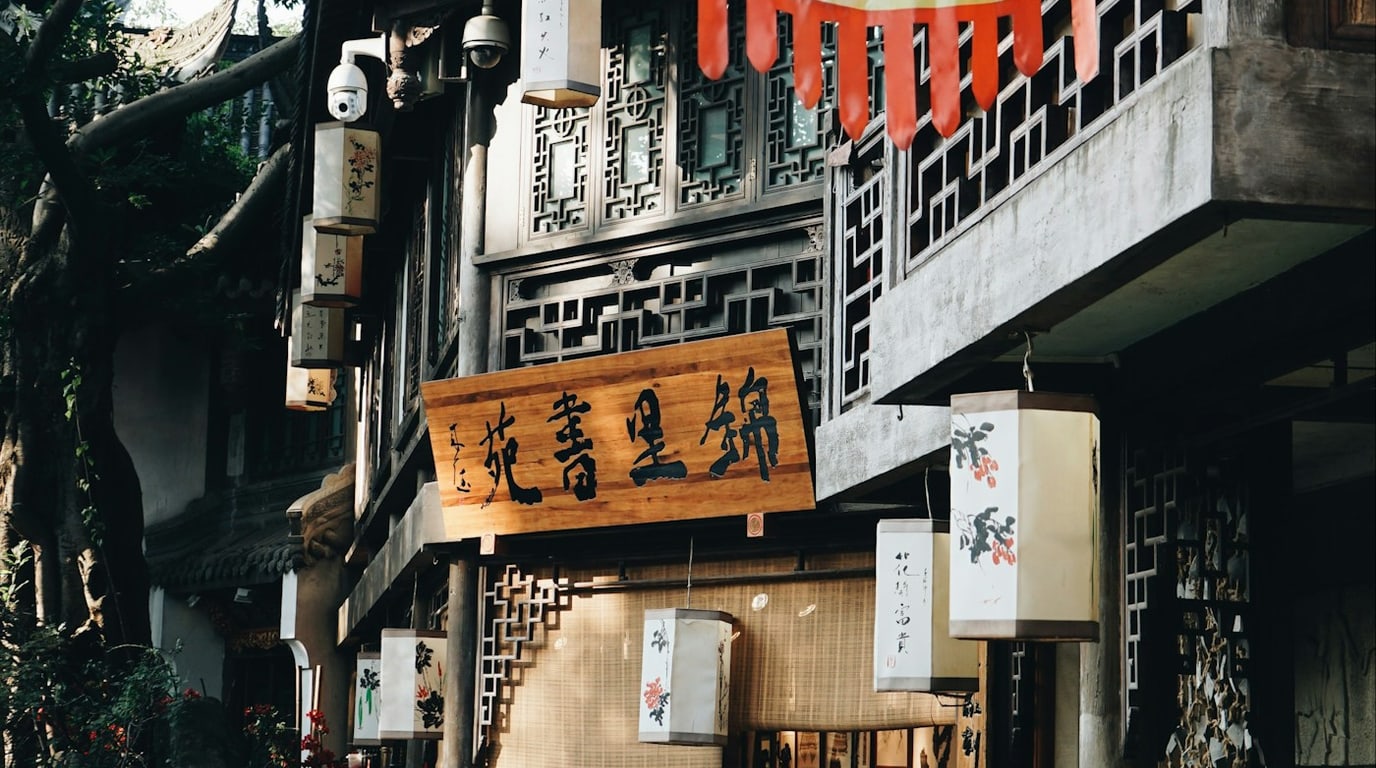
“Tea in China” is not one product. A traveler might want a chair in a Chengdu park, a walk through Hangzhou tea country, a museum that explains what they are drinking, a guided gongfu session, or 100 grams to take home. The old guide treated all of those as variations of the same cheap ritual. They have different places, charges, evidence, and failure modes.
Start with the job:
| Your actual goal | Best starting point | What must be resolved |
|---|---|---|
| Sit, talk, and watch the city | A named public teahouse such as Heming | Exact venue, park entrance, current hours, seat or tea charge |
| Learn how tea is grown and processed | Hangzhou tea-country route plus a museum campus | Village or trail anchor, exact activity operator, season, transport |
| Learn brewing with a host | A booked teahouse or workshop | Venue, session duration, language, private-room and service charges |
| Buy tea to drink at home | A named retailer or shopping district such as Maliandao | Exact seller, labeled product, origin, grade, weight, unit price, return-country rule |
Turn a tea video into the right object
A beautiful pour-over shot rarely resolves a place. The clip may show a tea type, a host, a village view, a venue, or a shop product—and those are not interchangeable.
Use these resolution levels:
- Tea idea: the source recommends
西湖龙井but shows no seller or venue. Save it as something to taste, not a pin. - District or landscape: the source identifies
梅家坞or马连道. Save the route anchor, not the most popular business inside it. - Named venue, branch unclear: a logo is visible but the city, campus, or branch is missing. Keep it probable.
- Resolved venue: official Chinese name, city, address or campus, storefront evidence, and map result agree.
- Resolved product claim: the package label records producer, product name, origin or protected-origin claim, grade if stated, net weight, production date, and seller. This claim belongs to that package—not every shop in the district.
Retain the source and the place separately:
Video or guide source and date:
Source claim:
Tea — English / label Chinese:
Experience — park seat / hosted session / farm activity / retail tasting:
Venue — English / official Chinese:
City, address, campus, floor, or stall:
Written charge — per person / seat / pot / weight / room:
Map identity and date checked:
Resolution — resolved / probable / unresolved:
A creator saying “free tasting” is evidence about their visit, not a permanent offer. A village location tag is not evidence that the leaves in an unmarked bag came from that village.
Chengdu: resolve one teahouse inside one park
Heming Tea House / 鹤鸣茶社 is an exact venue inside People’s Park / 人民公园. GoChengdu’s official visitor guide lists it at People’s Park, No. 12 Shaocheng Road, Qingyang District. Save the teahouse and the park entrance separately if you need a Didi drop-off; a vehicle pin at the building may not represent the practical park entrance.
This is the sit-and-drink job: choose a tea, receive a gaiwan or pot, and learn the current refill and seating arrangement on site. Do not publish a timeless “one price buys all day” promise. Weekends, holidays, reserved areas, snacks, performances, ear-cleaning services, and private seating can all change the bill and the experience.
Before ordering, confirm:
这个茶多少钱?— How much is this tea?按人、按杯,还是按壶?— Per person, cup, or pot?续水收费吗?— Is there a charge for hot-water refills?还有茶位费或服务费吗?— Is there a seat or service charge?
The useful field note is not “locals love it.” Record visit month, time, crowd level, where you entered the park, tea ordered, written charge and unit, refill terms, whether you could choose a seat, and how long you actually stayed.
Hangzhou: separate the landscape, activity, and museum campus
Hangzhou’s official tourism guide publishes a tea-country route from Meijiawu Tea Culture Village / 梅家坞茶文化村 through the Shili Langdang area and Longjing Village to the China National Tea Museum. That makes Meijiawu and Longjing Village / 龙井村 useful landscape anchors. Neither is one teahouse, one farm, or one guarantee of origin.
If a Reel shows picking, pan-firing, lunch, and tasting, identify the actual farmhouse or activity operator. Ask what is included, whether visitors genuinely participate or only watch, how long the walk is, and where the return ride can meet you. Keep the operator identity separate from the village pin.
The China National Tea Museum / 中国茶叶博物馆 has two campuses:
- Shuangfeng Campus / 双峰馆区 — 88 Longjing Road (
龙井路88号) - Longjing Campus / 龙井馆区 — 268 Wengjiashan (
翁家山268号)
The official Hangzhou guide lists both and notes different exhibitions and settings. A generic map result for “Tea Museum” is therefore insufficient. Check the current exhibition, opening day, and campus before leaving; do not use one campus’s map pin for an event at the other.
Spring harvesting can make the landscape and product story more legible, but it also raises demand and sales pressure. “Mingqian” (明前) describes harvest timing, not a universal quality or price guarantee. Preserve the exact label and seller claim rather than translating the term into “best.”
Beijing: treat Maliandao as comparison shopping
Beijing’s current municipal material describes Maliandao Tea Street / 马连道茶叶街 as a dense tea-shopping area. That makes it a strong district pin and a poor substitute for an exact seller. Go when the task is to compare products, packaging, and shops—not because a guide promised a serene ceremony.
For any tea you may buy, photograph:
- the full Chinese product name;
- producer and seller;
- declared origin and grade, if present;
- net weight and production date;
- the displayed price and its unit;
- the sealed package you will actually receive.
China commonly quotes tea using several units. 一斤 is 500 grams and 一两 is 50 grams in mainland retail contexts, but a seller can also quote per gram, package, cake, box, or session. Never compare two numbers until the unit, weight, grade, and product match. Ask the seller to write the total for the exact package before it is opened or sealed.
A tasting is not automatically free or dishonest
Retail sampling, a paid hosted session, and a teahouse order can look identical for the first few minutes. The difference should be disclosed before service.
Show this before sitting:
品茶收费吗?不买可以吗?
Is there a fee for tasting? Is it okay not to buy?

请写清楚茶叶、重量、单价、茶位费、包间费和总价。
Please write the tea, weight, unit price, seat or room fee, and total.
Also ask whether snacks, water, a private room, tea performance, or service are separate charges. Photograph the menu or written quote. Market-regulation guidance on hidden or discriminatory menus recommends confirming all charges before ordering and retaining the menu, bill, and payment record.
Do not assume a crowded room, Chinese-only menu, free first pour, or “tea farmer” story proves legitimacy. Verify the commercial terms you can actually observe.
The invitation scam has a different signature
Australian government travel advice documents a recurring pattern: someone approaches a traveler in public, offers English practice or a nearby tea, massage, café, or bar experience, and the traveler later faces an inflated bill and may be prevented from leaving.
The boundary is simple: choose the venue yourself. Do not follow a stranger who initiated contact to the venue they selected. This is different from discovering that an ordinary teahouse is expensive; the approach and control of the venue are part of the warning.
If the bill changes in an ordinary venue:
- Compare it with the menu or written quote and ask for an itemized bill.
- Keep screenshots, photos, chat, receipt, payment record, venue name, and map location.
- If it is safe, dispute undisclosed charges and contact the city’s
12345public-service channel for consumer routing. - If you are threatened or physically prevented from leaving, prioritize safety and call police at
110or ask a nearby staffed business or hotel to call. - If a card or wallet payment was coerced or altered, contact the provider or issuing bank promptly after reaching safety.
Etiquette without invented universal rules
In some tea settings, guests tap bent fingers on the table as thanks after a pour. It is an appreciated gesture, not an entry requirement. Pouring order, cup placement, whether a first rinse is discarded, and how a guest signals “enough” vary by region, host, tea, and setting.
Follow the host rather than performing a script:
- wait until the host indicates which cup is yours;
- ask before handling the teapot, tools, or displayed cakes;
- do not treat a rinse as drinking water unless the host serves it;
- say clearly when you have had enough, especially if caffeine matters to you;
- ask before photographing a host, other guests, or a sales negotiation.
Curiosity is useful. Confidently imposing one region’s ritual on another is not.
Buy for drinking, not for a story
Tea price can legitimately vary with cultivar, origin, harvest, processing, storage, age, grade, producer, and packaging. That is exactly why a national “fair price per 500 grams” is misleading.
For a first purchase:
- Set the use: daily drinking, gift, or a specific tea you already tasted.
- Set a total budget before the tasting starts.
- Buy a smaller labeled quantity of the exact tea you tasted.
- Ask whether the sample and packaged product are the same lot or grade.
- Keep the receipt and photograph the label before leaving.
- Decline health, guaranteed appreciation, “mother tree,” “ancient tree,” or collectible-investment claims you cannot verify.
Vacuum sealing is useful for some products and not a universal quality signal. Storage needs differ: fresh green tea, roasted oolong, compressed dark tea, and scented tea should not be given one storage rule. Ask the producer, then keep the tea away from heat, light, moisture, and strong odors unless the product instructions say otherwise.
Check the return border before buying
Do not use “sealed tea is fine in most countries” as customs advice. Rules depend on destination, processing, ingredients, quantity, value, packaging, and current biosecurity conditions.
- United States: CBP says travelers must declare all food and agricultural products. Declaration allows an agriculture specialist to inspect and decide admissibility.
- Great Britain: use the current GOV.UK food, plant-product, and personal-goods guidance for the exact packaged product and value.
- Australia: declare tea and check the current Australian Border Force and BICON conditions; ingredients and commercial packaging matter.
- Elsewhere: check the destination customs and agriculture authority, not the seller or a general travel post.
Avoid loose products containing fresh leaves, seeds, fruit peel, soil, insects, or unidentified herbal ingredients unless the destination rule clearly allows them. Keep original commercial packaging and receipts, and declare whenever the form or authority requires it.
The best tea experience is not the cheapest or most ceremonial. It is the one whose place, format, price unit, product claim, and next step remain understandable after the first beautiful pour.
From guide to map
Review the places from this guide
We keep the Chinese name and city together so you can verify the right branch before opening AMap, Apple Maps, or Didi.
-
Heming Tea House / 鹤鸣茶社
Chengdu · Exact sit-and-drink venue inside People's Park; confirm current hours and session terms
-
Meijiawu Tea Culture Village / 梅家坞茶文化村
Hangzhou · Tea-country route anchor, not a specific farmhouse or proof of tea origin
-
Longjing Village / 龙井村
Hangzhou · Village and landscape anchor; resolve any teahouse or seller separately
-
China National Tea Museum — Shuangfeng Campus / 中国茶叶博物馆(双峰馆区)
Hangzhou · Museum campus at 88 Longjing Road; do not confuse with the Longjing campus
-
China National Tea Museum — Longjing Campus / 中国茶叶博物馆(龙井馆区)
Hangzhou · Separate museum campus at 268 Wengjiashan
-
Maliandao Tea Street / 马连道茶叶街
Beijing · Tea-shopping district with many independent sellers, not one shop or fixed tasting
Frequently asked questions
- How do I avoid a tea-ceremony scam in China?
- Do not follow a stranger who approached you in public to a teahouse, café, bar, or 'English practice' venue they selected. Government travel advice documents this invitation-then-inflated-bill pattern. Choose the venue yourself, review the written price and all seat, room, service, tea-weight, and minimum-purchase charges before brewing, and keep menu and payment evidence.
- How much should a Chinese teahouse cost?
- There is no trustworthy national fair-price band. A park gaiwan, hosted tasting, private room, tea-by-weight session, and retail sampling are different products. Ask whether the price is per person, seat, pot, gram, 50 grams, or 500 grams; whether water refills and snacks are included; and whether there is a service fee or minimum purchase. Confirm the total in writing before the first brew.
- What is the difference between Heming Tea House, Longjing Village, and Maliandao?
- Heming Tea House is one named sit-and-drink venue inside Chengdu People's Park. Longjing Village and Meijiawu are Hangzhou tea-growing landscape and route anchors with many independent businesses. Maliandao is a Beijing shopping district with many tea sellers. They should not be ranked or mapped as the same kind of place.
- Can I taste tea without buying it?
- Ask first. Some shops offer samples as part of retail service, while other venues sell a hosted session or expect a purchase. Before sitting down, show: '品茶收费吗?不买可以吗?' (Is there a fee for tasting? Is it okay not to buy?) and confirm any minimum purchase or room charge.
- Can I bring Chinese tea home?
- Check the destination country's current agriculture and personal-goods rules before buying. The United States requires travelers to declare all food and agricultural products; Australia requires declaration and product-specific biosecurity checks; Great Britain has its own food and plant-product rules. Keep tea commercially packaged, labeled, free of soil or fresh plant material, retain the receipt, and declare when required.
Sources checked
We use official or first-party sources for rules and fast-changing product details. Community reports shape the failure-mode advice, not the underlying policy.
- GoChengdu official visitor guide — Heming Tea House in People's Park
Checked July 12, 2026
- Hangzhou culture and tourism guide — Meijiawu, Longjing Village and China National Tea Museum route
Checked July 12, 2026
- Hangzhou culture and tourism — China National Tea Museum campuses
Checked July 12, 2026
- Beijing municipal portal — 2026 profile of Maliandao Tea Street
Checked July 12, 2026
- Australian Smartraveller — massage and tea-ceremony scam pattern
Checked July 12, 2026
- Huadu Market Regulation — 2026 consumer warning on hidden and discriminatory menus
Checked July 12, 2026
- US Customs and Border Protection — declare all food and agricultural products
Checked July 12, 2026
- GOV.UK — bringing food into Great Britain
Checked July 12, 2026
- Australian Border Force — current food, plant and tea declaration guidance
Checked July 12, 2026