Food
Ordering Food in China: QR Menus, Dietary Cards & Delivery Recovery
A practical China restaurant workflow — decode QR menus, keep food videos tied to the right branch, communicate vegetarian or allergy needs, and recover when payment or delivery fails.
China Travel Made Easy concierge desk · Last updated · 6 primary sources checked
Decision first
What should I do?
- Best for
- Visitors who cannot read Chinese and need to turn a food recommendation into the correct restaurant branch, a complete order, or a safely declined meal.
- Do this
- Prepare offline screenshot translation and two payment methods, save every restaurant with its official Chinese branch identity, and separate preferences from medically necessary allergy or celiac requirements.
- Watch for
- A translated dish name is not an ingredient list, a vegetarian label is not a cross-contact promise, and a successful foreign-card setup does not guarantee that a specific menu mini-program or delivery login will work.
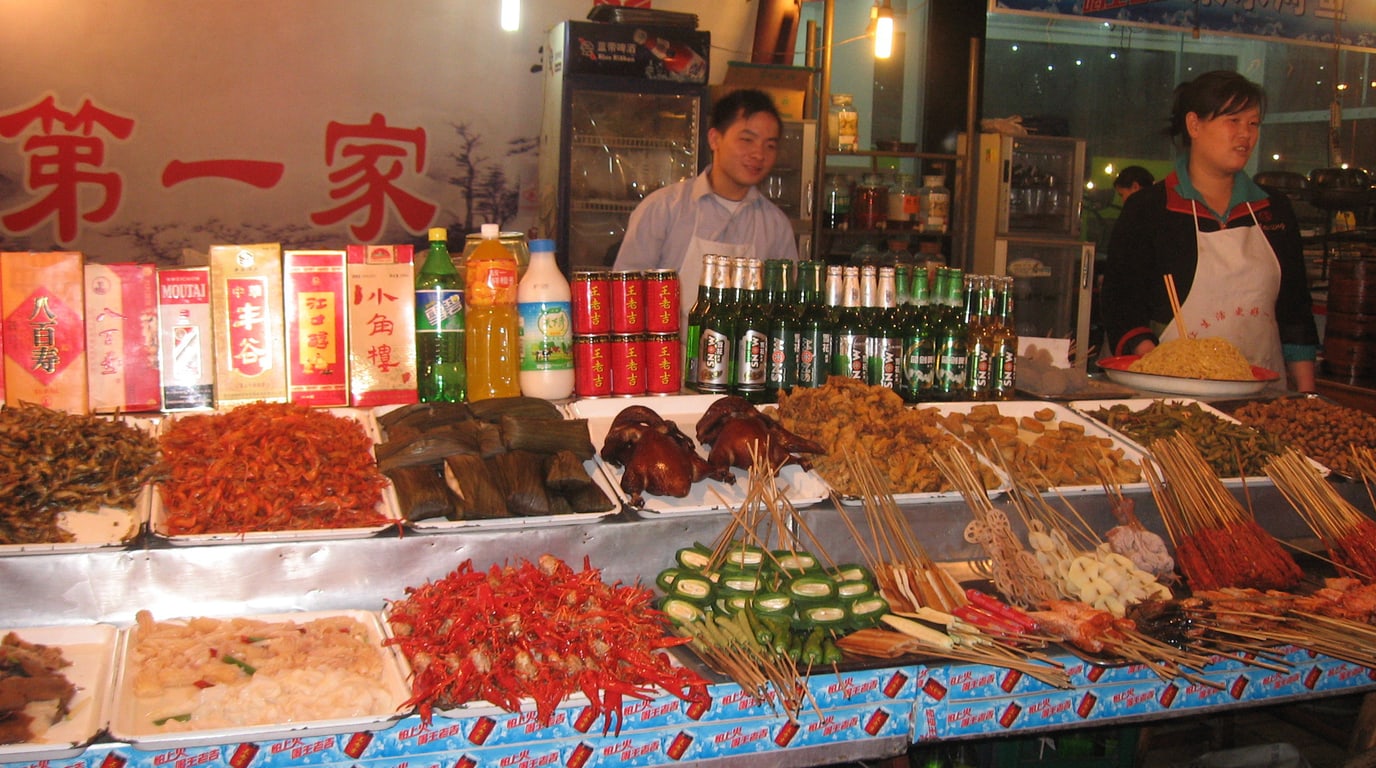
China’s most useful food skill is not memorizing famous dishes. It is being able to move from a clip or recommendation → the correct branch → the original menu → a complete order → a clear fallback without allowing translation or an app to conceal what you do not know.
For a traveler with no medical dietary restriction, this becomes easy after a few meals. For a traveler with anaphylaxis or celiac disease, the same interface can create false confidence. Treat those as different journeys.
First decide what kind of need this is
| Need | Example | Appropriate standard |
|---|---|---|
| Preference | Less chili, no cilantro, no organ meat | Short written request; accept that the kitchen may not guarantee it |
| Diet or religious practice | Vegetarian, vegan, halal, no pork | State the exact excluded ingredients; choose a restaurant whose kitchen matches the need |
| Medical intolerance or celiac disease | Gluten exposure causes illness | Ask about ingredients and shared preparation; leave if the kitchen cannot verify them |
| Severe allergy or anaphylaxis risk | Peanut, tree nut, sesame, shellfish | Clinician-reviewed plan, reviewed chef card, prescribed medication immediately accessible, and a self-catering or known-safe fallback |
Do not upgrade a preference into “allergy” to make it sound important. Staff need to know whether the request is flexible or a medical boundary. Do not downgrade an allergy into “I don’t like peanuts” because the translation feels easier.
Turn a food video into a real destination
A food video can contain three different objects:
- A dish idea —
煎饼jianbing is worth trying, but no vendor is identified. - A restaurant identity — the name and city are visible, but the chain branch is unknown.
- A resolved branch — official Chinese name, city, district, address, and storefront evidence agree.
Only the third is ready to become a pin. The first belongs in the city guide; the second needs a branch question. Saving a famous restaurant because a clip showed the same dish poisons the community map.
Keep this evidence together:
Traveler claim and source:
Dish shown — English / Chinese:
Restaurant — English / official Chinese:
City and district:
Exact branch or mall floor:
Chinese address and phone:
Storefront, caption, location-tag, or receipt evidence:
AMap or Apple Maps match checked:
Dietary or allergy claim made by the source: yes / no / unverified
Food safety and dietary suitability are not inherited from the video. A creator saying “gluten-free” is evidence of what they said, not certification of the kitchen. China Travel Made Easy should show the claim, its date, and the resolved place separately.
Before the first restaurant
- Set up both Alipay and Weixin Pay and keep RMB cash; a linked overseas card can still fail inside a specific mini-program. See the payment guide.
- Download Simplified Chinese for offline translation and practise importing a screenshot. See the translation guide.
- Save the first restaurant’s official Chinese branch name and address rather than translating its English name.
- If you have a medical restriction, discuss the trip with the clinician who manages it, keep prescribed medication in your carry-on and on your person, and prepare both printed and phone copies of a professionally reviewed card.
- Ask the hotel what Chinese address, phone number, lobby shelf, or delivery note a courier should use. Do this before you need food while sick or arriving late.
The QR-menu workflow
There is no single national menu interface. A table code may open a WeChat mini-program, Alipay mini-program, ordinary web page, restaurant app, or simply the menu. Use the words and icon printed beside the code rather than assuming which scanner to open.
- Confirm identity. Check the restaurant name and, if shown, the table number. A neighboring table’s code can submit to the wrong seat.
- Look for language controls. Use an official English menu when present, but retain the Chinese dish name for staff confirmation.
- Screenshot one item at a time. Capture its name, description, price, image, and options; import the screenshot into the installed translation app.
- Inspect required choices. Common traps are size, quantity, spice, meat, broth, temperature, toppings, combo drinks, and a default paid add-on.
- Read the cart as a new screen. Confirm dish count, table, total, and whether the button submits an order or proceeds to payment.
- Keep the confirmation. Do not resubmit because nothing appears immediately; look for an order number or ask staff to check it.
If the flow fails, use the smallest recovery:
- QR will not open → ask for a physical menu or staff ordering;
- login or phone verification fails → ask staff to place the order;
- translation is confusing → show the original item and ask the person to point to the correct option;
- foreign card fails → try the other wallet, change QR direction, or use cash;
- no table service appears → show the order confirmation rather than repeating the payment.
Useful text:
我打不开这个点餐二维码。可以请您帮我点餐吗?
I cannot open this ordering QR code. Could you help me order?
Translate the transaction, not just the dish name
A literal dish name may be cultural, poetic, or incomplete. Translate and verify the fields that change the decision:
- main protein and visible ingredients;
- cooking oil, sauce, stock, marinade, garnish, and dipping sauce;
- hot or cold, raw or cooked;
- portion, pieces, and whether it is intended for sharing;
- spice level and whether chili oil arrives separately;
- bones, shells, offal, or whole fish;
- required extras and final price.
For a routine meal, pointing at the original item and using short typed questions works well. For a medical restriction, the absence of an allergen word in the translated description proves nothing.
Dietary cards that expose the real boundary
These are starting structures, not personalized medical cards. Have medically important Chinese reviewed for the exact allergen, aliases, oils, sauces, and cross-contact you need.
Vegetarian or vegan
我吃素,不吃肉、鱼、海鲜,也不要肉汤、动物油和蚝油。
I am vegetarian. No meat, fish, seafood, meat stock, animal fat, or oyster sauce.
For vegan needs, also name egg, milk, butter, and other animal products you avoid. Search for 素食 and verify the exact branch. A temple area does not make every nearby restaurant vegetarian, and a dish placed in a “vegetable” section can still use animal stock or fat.
No pork or halal
我不吃猪肉,也不要猪油和猪骨汤。
I do not eat pork, lard, or pork-bone stock.
清真 identifies a halal restaurant or product, but confirm that the specific branch carries the sign and meets your practice. Do not infer it from a Lanzhou-style name alone.
Severe allergy or celiac disease
A reviewed card should make five things explicit:
- this is a medical condition and the severity;
- the exact forbidden food plus Chinese aliases;
- derivative ingredients such as oil, sauce, paste, stock, marinade, or seasoning mix;
- whether shared cookware, fryer oil, utensils, or surfaces are unsafe;
- permission for staff to say they cannot guarantee it.
Questions to have reviewed and add as appropriate:
这道菜和使用的油、酱料、高汤里含有……吗?
Does this dish, including its oil, sauce, and stock, contain …?
如果不能保证没有……,请直接告诉我,我不会点这道菜。
If you cannot guarantee it is free from …, please tell me; I will not order it.
The CDC recommends chef cards, a reviewed medication and anaphylaxis plan, immediately accessible prescribed medication, nearby emergency-care details, and self-catering where practicable. A restaurant being large, expensive, international, vegetarian, or inside a hotel does not automatically prove cross-contact control—ask what that kitchen can do.
For celiac disease, rice itself may be gluten-free while soy sauce, seasoning, broth, marinade, a shared wok, or fryer is not. “Clear broth,” hotpot, and a translated 无麸质 label are not blanket safe recommendations.
Packaged labels are changing—but not yet enough
China published a new prepackaged-food labeling standard, GB 7718-2025, with stronger allergen requirements scheduled for March 16, 2027. In July 2026, it is still in transition. More importantly, the National Health Commission’s Q&A says restaurant food and food prepared and sold on site are outside the prepackaged-food standard.
Therefore:
- do not assume a 2026 package has the future allergen presentation;
- retain and translate the complete ingredient list, not only a front label;
- do not transfer a packaged-food label rule to a restaurant dish;
- if cross-contact matters, a missing warning is not proof of absence.
Delivery is an optional convenience, not the first meal plan
Overseas visitors do use food delivery through Alipay, but the successful path is not universal. Meituan, Ele.me, their mini-program versions, and other services can differ on foreign-number login, identity checks, payment, coupons, and courier contact.
Before ordering to a hotel, collect:
Hotel official Chinese name:
Chinese street address:
Building or tower:
Room number, if the hotel permits it:
Reception phone approved for delivery use:
Lobby shelf, locker, or robot instructions:
Chinese note for the courier:
Then place a low-stakes test order while reception is staffed. Watch for an in-app message or phone call and collect promptly. If verification loops, the courier cannot call, or the address cannot be selected, ask reception whether they can help—do not enter the hotel’s phone number without permission.
For a severe allergy or celiac disease, delivery removes the most useful safety step: a live, inspectable conversation with staff before the kitchen accepts the order. Use only a previously verified kitchen and exact repeat order; otherwise choose self-catering or speak to the restaurant in person.
Food and water safety without folklore
“The stall is busy” can suggest turnover, but it does not reveal water quality, refrigeration, hand hygiene, or whether food is fully cooked. CDC’s durable traveler rule is stronger:
- choose food cooked fully and served steaming hot;
- avoid raw or undercooked meat, seafood, and eggs when safety is uncertain;
- avoid food that should be hot or cold but is sitting lukewarm;
- choose fruit you peel yourself and factory-sealed packaged food or drinks;
- use factory-sealed bottled water or adequately boiled water when you are not reasonably sure the tap source is safe.
This is a risk choice, not a moral judgment about street stalls. A careful traveler may still eat street food; the useful signal is the food’s preparation and holding condition, not its Instagram popularity.
If a reaction or serious illness begins
Follow the action plan provided by your clinician and use prescribed emergency medication as instructed. Do not wait for a translation app to settle whether symptoms are serious. In mainland China, 120 is the first-aid and ambulance number; keep the hotel or restaurant’s Chinese address visible and seek emergency medical care.
Carry this location line separately from the food card:
我们在这里:……。有人出现严重过敏反应,需要救护车。
We are here: …. Someone is having a severe allergic reaction and needs an ambulance.
The successful food journey is not “the app accepted my order.” It is knowing which branch the recommendation meant, what you actually selected, which risks remain unverified, and what you will do if the restaurant or phone cannot complete the task.
Frequently asked questions
- How do I order from a QR-code menu in China?
- Scan with the app named beside the code, confirm the restaurant and table, screenshot each dish and its required options, check quantity and total, then submit or pay. The exact WeChat, Alipay, browser, or mini-program flow varies. If login, translation, or payment fails, ask staff to order manually and pay by the other wallet or RMB cash.
- How should I prepare for a severe food allergy in China?
- Follow a clinician-reviewed action plan, carry prescribed medication on your person, prepare a professionally reviewed Simplified Chinese chef card, and identify nearby emergency care. Ask whether the kitchen can handle the allergen and cross-contact; if the answer is unclear, do not order. CDC guidance also recommends considering self-catering and carrying safe food.
- Can I trust allergen labels or a translated menu?
- No. China’s new GB 7718-2025 standard strengthens allergen labeling for prepackaged food from March 16, 2027, but it is not yet in force in 2026 and the National Health Commission says restaurant and freshly prepared food are outside that standard. Translation can also miss sauces, stock, cooking oil, or cross-contact.
- Is vegetarian or vegan food easy to order in China?
- Dedicated 素食 restaurants are the clearest starting point, but still state the exact boundary you need. In an ordinary restaurant, a vegetable dish may use meat stock, lard, oyster sauce, egg, or dairy. ‘No visible meat’ is not the same as vegetarian, vegan, halal, or allergy-safe.
- Can a visitor use Meituan or Ele.me food delivery?
- Food delivery is possible—State Council reporting confirms overseas visitors use it through Alipay—but do not assume every standalone app, mini-program, foreign number, card, or hotel address will pass verification. Get the hotel’s Chinese address and delivery instructions first; if the courier call or login cannot work, ask reception to help or eat nearby.
- How do I choose safer street food?
- Do not use popularity alone as a safety test. CDC guidance favors food cooked fully and served steaming hot, fruit you peel yourself, and factory-sealed drinks; raw or undercooked food and food held lukewarm carry more risk. If water safety is uncertain, use sealed bottled or adequately boiled water.
Sources checked
We use official or first-party sources for rules and fast-changing product details. Community reports shape the failure-mode advice, not the underlying policy.
- State Council — 2025 guide to working and living in China
Checked July 12, 2026
- State Council — overseas visitors using Alipay for food delivery
Checked July 12, 2026
- CDC Yellow Book — severely allergic travelers
Checked July 12, 2026
- CDC Yellow Book — food and water precautions for travelers
Checked July 12, 2026
- National Health Commission — GB 7718-2025 prepackaged-food labeling Q&A
Checked July 12, 2026
- Beijing Market Regulation — new prepackaged-food label standard starts March 16, 2027
Checked July 12, 2026