China Travel Made Easy
All destinations

City

Guilin

A karst city, Ming royal history, cave geology, and the upstream half of a one-way Li River journey

Guilin is worth two grounded city days before the river: read how tower karst shaped the basin, put the Ming princes back into the center, then choose the exact cruise terminal that turns the city stay into a Yangshuo transfer.

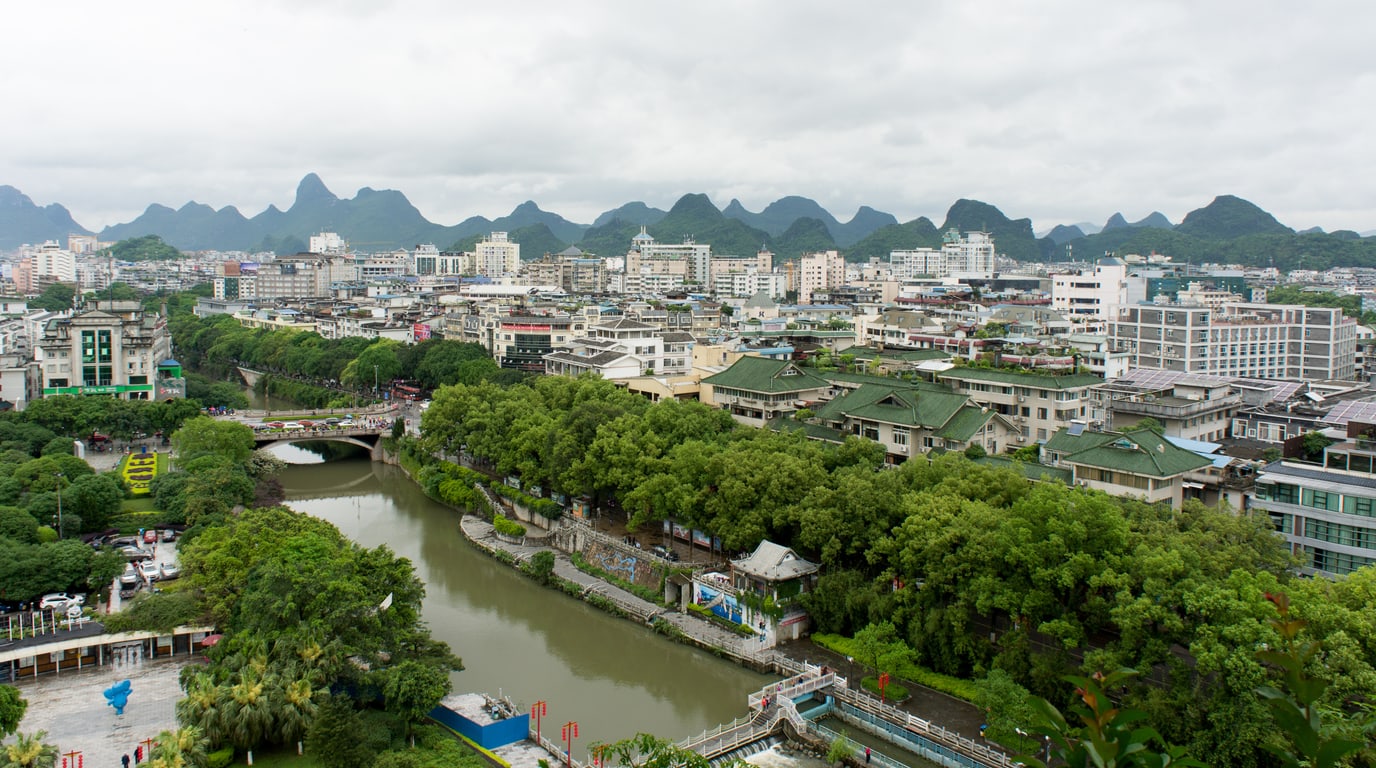
Guilin city threaded between karst towers and rivers
Cover source: View of Guilin from Elephant Trunk Hill

Destination digest

Guilin, beyond the checklist

Guilin is not the airport before Yangshuo. Two city days reveal the lowland tower-karst landscape, a Ming princely city, and the underground system; a third morning becomes a one-way river transfer only after the ticket, terminal, luggage, and weather dependencies are explicit.

Useful minimum
Two city days, then a third morning for a one-way Li River transfer to Yangshuo
Best first base
Central Guilin between 王城 and 杉湖 for walkable evenings; use Lingui only when west-side logistics dominate
Karst rule
Read the city towers, cave interior, and Li River as one water-shaped limestone system—not three unrelated photo stops
Cruise rule
磨盘山客运港 serves three-star boats; 竹江客运港 serves four-star boats; both end at 阳朔龙头山码头
Luggage rule
The classic cruise is one way and has no luggage storage—board with the luggage plan for your Yangshuo stay
Weather rule
Check the official maritime notice on departure morning and keep a complete city-day recovery route

Read the city before boarding the river

UNESCO describes Guilin Karst as the best-known continental fenglin landscape: isolated towers and clustered peaks developed together in a low basin fed by water from the surrounding hills. That is why the city feels threaded between rock, river, cave, road, and ordinary neighborhoods. Start with the landscape as a system instead of collecting one elephant-shaped photo and leaving for Yangshuo.

Arrival half-day: use the museum to separate city from scenery

Guilin Museum’s current building is in Lingui, west of the historic center, not at its former downtown address. Its city-history, folk-culture, Jingjiang-princes, and international-exchange displays give the region a chronology before the landscape becomes a slogan. The museum normally lists free admission Tuesday–Sunday, 09:00–17:00, with last entry at 16:30 and Monday closure; verify the current notice and group it with an airport or west-side arrival rather than pretending it sits beside the river sights.

Day one: put the Ming city back inside modern Guilin

Enter the Duxiu Peak–Jingjiang Princes’ City scenic area through Zhengyang Gate. The walled compound, princely history, examination culture, cliff inscriptions, and Solitary Beauty Peak explain why this was a political center, not merely a viewpoint behind a shopping street. Walk south through the public city to Elephant Trunk Hill’s Gate 1 as a second, separate identity. The hill is a compact river landmark; it does not replace the royal-city visit or the larger karst story.

Day two: read one cave as part of the same water system

Reed Flute Cave is northwest of the center and has its own visitor center, timed interior, steps, lighting, and transport requirement. Its official route is roughly 500 meters inside a 240-meter-deep cave. Treat the formations as evidence of dissolution and deposition inside the same limestone landscape seen above ground. Check the live opening and ticket notice; combine it with a slow city afternoon rather than stacking several similar caves or buying an undefined “Guilin caves” package.

Day three: the Li River cruise is a base change

The official classic cruise runs roughly four hours and about 60 kilometers downstream, ending at Yangshuo Longtoushan Wharf; it does not return to Guilin. The ticket does not include transport from the city to the departure port or onward transport after arrival, and the official guidance says there is no luggage-storage service because the boats run one way. Pack for the next hotel, leave Guilin early enough for ticket and security checks, and do not build the day around a same-city return assumption.

Choose the terminal that matches the ticket

Three-star boats leave from Mopan Mountain Passenger Port; four-star boats leave from Zhujiang Passenger Port. The official guide places the ports about 6.5 kilometers apart and roughly 40–50 minutes from central Guilin. They are not two names for the same jetty. Preserve the Chinese terminal from the confirmed ticket, allow about ninety minutes from the city, and reject a driver’s claim that either port is close enough when boarding has already begun.

Water level is a dependency, not a footnote

Heavy rain, high water, low water, fog, or a maritime-control notice can change or stop navigation. In July 2026 the official operator suspended and then restored the classic and Xingping routes as water conditions changed. Check the official notice again on departure morning and keep the purchase channel for refunds or rebooking. Your recovery day is still a complete Guilin day—museum, royal city, cave, or public lakeside walk—not an unlicensed boat sold outside the terminal.

Stay for the route you are actually taking

The historic center between Wangcheng and Shan Lake is the easiest first base for walking and food. Lingui is practical for the museum, airport, or west-side errands but not for every central sight. Guilin, Guilin North, and Guilin West are different railway stations; save the exact Chinese station from 12306. Longji Rice Terraces require their own long transfer and are better treated as an overnight or a separate route, not squeezed between a cave and the morning cruise.

Places worth building around

The anchors in this digest

Each place keeps the reason it belongs in the day. Full digests also preserve the local name, exact branch or entrance, and a checked execution query.

Lingui city-history anchor

Guilin Museum — Lingui building

桂林博物馆(临桂馆)

01

The current Lingui museum gives the karst region a human chronology through city history, folk culture, the Jingjiang princes, paintings, and international exchange. Naming the Lingui building prevents an old guide or map result from sending travelers to the museum’s former downtown address or confusing it with Guangxi Museum in Nanning.

The published pattern is free admission Tuesday–Sunday 09:00–17:00, last entry 16:30, with Monday closure. Confirm the live notice and group the west-side location with an airport or Lingui arrival; it is not a quick walk from Wangcheng, Elephant Hill, or the central lakes.

桂林市临桂区平桂西路一院两馆内

Ming royal-city entrance

Duxiu Peak–Jingjiang Princes’ City at Zhengyang Gate

独秀峰王城景区(正阳门)

02

Zhengyang Gate is the operational entrance to the walled Jingjiang Princes’ City and Solitary Beauty Peak complex. It keeps the paid royal-city visit distinct from public Zhengyang Street, East–West Alley, Guangxi Normal University entrances, the princes’ tombs outside the center, and generic “Duxiu Peak” viewpoints.

Use the official site for the current ticket, entry, and closure notice. Give the compound time for its princely history, examination culture, inscriptions, and archaeology before climbing; do not buy a street seller’s undefined “Wangcheng” ticket or assume a public alley entrance reaches the scenic area.

桂林市秀峰区王城1号,独秀峰王城景区正阳门

City-river landmark entrance

Elephant Trunk Hill Scenic Area Gate 1

象鼻山景区1号门

03

Gate 1 is a reproducible entrance to Guilin’s compact river landmark at the Li and Peach Blossom rivers. It avoids vague pins on the opposite bank, boat-only viewpoints, other Elephant Hills, and map results for the much larger Two Rivers and Four Lakes system while keeping the landmark in a walkable city route.

Check the official channel for the current opening and any reservation or capacity rule, especially on holidays. Visit early or late, then continue through public riverside streets; do not let a short photo stop consume the day or buy an unrelated night-cruise ticket because it uses the same scenic-area brand.

桂林市象山区民主路,象鼻山景区1号门

Northwest cave-interpretation anchor

Reed Flute Cave visitor center

芦笛岩景区游客中心

04

The visitor center grounds one specific cave northwest of central Guilin. It preserves the ticket, guided or timed interior, roughly 500-meter underground route, and return transport instead of collapsing Reed Flute Cave, Seven Star Cave, Crown Cave, or a generic “Guilin cave” package into the same experience.

Confirm current opening, ticket, accessibility, and interior conditions on the official site. Wear shoes for damp steps, keep a layer for the cave, and pair this with a slow city afternoon rather than paying to repeat several heavily lit caves in one itinerary.

桂林市秀峰区芦笛路1号,芦笛岩景区游客中心

Three-star Li River cruise departure

Mopan Mountain Passenger Port

磨盘山客运港码头

05

Mopan Mountain is the official upstream departure for three-star classic Li River boats to Yangshuo. Saving the port identity prevents substitution with Zhujiang’s four-star boats, a city night-cruise pier, Mopan Hill, or a tour-bus pickup; the mistake can become unrecoverable once ticket checks and boarding begin.

Match 磨盘山客运港 to the confirmed ticket, carry the booked passport, and leave central Guilin about ninety minutes before the instructed time for the 28-kilometer road transfer, ticketing, and security. The cruise is one way to Longtoushan Wharf and has no luggage storage, so board with the next-hotel plan.

桂林市雁山区磨盘山客运港码头

Four-star Li River cruise departure

Zhujiang Passenger Port

竹江客运港码头

06

Zhujiang is the separate official departure for four-star classic Li River boats. It sits about 6.5 kilometers from Mopan Mountain and cannot be treated as an alternate gate. Keeping both ports as different identities ties the vessel class, ticket, opening notice, pickup, and missed-boarding risk to the actual product.

Navigate only after the ticket confirms 竹江客运港, carry the same identity document, and allow the full city-to-port buffer. Check the official maritime notice that morning; if water conditions stop the route, use the purchase channel for rebooking or refund rather than accepting an unlicensed replacement boat.

桂林市雁山区竹江客运港码头
Guide matches

Start with these guides

These are the current China Travel Made Easy guides most relevant to planning Guilin. Start here for the logistics that affect cost, comfort, and avoidable mistakes before the route gets specific.

Destination QA

Answers for planning Guilin

What is Guilin best for on a China trip?

+

Guilin is best for a karst city, Ming royal history, cave geology, and the upstream half of a one-way Li River journey. Guilin is worth two grounded city days before the river: read how tower karst shaped the basin, put the Ming princes back into the center, then choose the exact cruise terminal that turns the city stay into a Yangshuo transfer.

Where should travelers start in Guilin?

+

Start with Guilin Museum — Lingui building in Lingui city-history anchor, Duxiu Peak–Jingjiang Princes’ City at Zhengyang Gate in Ming royal-city entrance, Elephant Trunk Hill Scenic Area Gate 1 in City-river landmark entrance, Reed Flute Cave visitor center in Northwest cave-interpretation anchor, Mopan Mountain Passenger Port in Three-star Li River cruise departure, Zhujiang Passenger Port in Four-star Li River cruise departure. These are useful first pins before adding nearby food, transit, and stay ideas.

Which guides should I read before visiting Guilin?

+

Start with China Attraction Tickets: Passport Booking, Release Windows & Sold-Out Recovery, China's High-Speed Trains: Booking on 12306 or Trip.com as a Foreigner, China Neighborhood Walks: Public Routes, Residential Boundaries & Reliable Exits. These guides cover the practical setup and decisions most relevant to this destination.

Can I save Guilin recommendations from posts or screenshots?

+

Yes. Use Save Places to paste the caption, OCR text, note, or place list, then review the bilingual identities before creating AMap or Apple Maps handoffs. A bare social URL is not fetched by the static prototype.